
Best Bamboo Pants for Sensitive Skin: 2026 Guide

Table of Contents
- Quick Comparison: Best Bamboo Pants for Sensitive Skin
- Riko Sport Pant: Best Everyday Bamboo Pant for Sensitive Skin
- Umi Jogger: Best Bamboo Jogger for All-Day Comfort
- Clare Flare: Best Bamboo Flare for Breathable Ease
- Benefits of Bamboo Fiber Clothing for Sensitive Skin
- Bamboo vs Organic Cotton for Sensitive Skin
- How to Wash Bamboo Pants for Longevity
- How We Evaluated These Bamboo Pants
- Frequently Asked Questions
Last Updated: September 17, 2026
Quick Comparison: Best Bamboo Pants for Sensitive Skin
Finding the best bamboo pants for sensitive skin starts with one question: does the fabric calm your skin or quietly aggravate it? Bamboo blends that skip harsh finishes and heavy synthetic content tend to win. This guide from Ecogoldencomfort breaks down four pairs worth your attention, all built around bamboo and organic cotton rather than slick synthetic shortcuts.
| Pant | Price | Fabric | Best For |
|---|---|---|---|
| Riko Sport Pant | $50.00 | Eco Germ Gard bamboo, organic cotton, spandex | Everyday wear |
| Umi Jogger | $55.00 | Bamboo, organic cotton, spandex | All-day comfort |
| Clare Flare | $70.00 | Bamboo, organic cotton blend | Breathable ease |
Riko Sport Pant: Best Everyday Bamboo Pant for Sensitive Skin
The Riko Sport Pant is the best everyday bamboo pant for sensitive skin because it pairs a smooth bamboo-organic cotton blend with a waistband that never digs. The 31-inch high-rise cut uses Eco Germ Gard bamboo, which is naturally antimicrobial and odor-resistant, so the fabric stays fresh against skin that reacts to trapped heat and sweat.

Why the Riko Works for Reactive Skin
Sensitive skin barrier function weakens when fabric traps moisture or rubs. The Riko's bamboo and organic cotton blend moves air and wicks moisture, which reduces the friction and dampness that trigger irritation. It comes in Plum and Olive Green, both at $50.00.
Fit, Fabric, and Real Pockets
Front slant pockets and full rear pockets hold a phone without a squeeze. The soft elastic waistband with an inside drawcord gives a secure, adjustable fit. Built-in UV protection adds sun defense, and the fabric gets softer with every wash.
Umi Jogger: Best Bamboo Jogger for All-Day Comfort
The Umi Jogger is the best bamboo jogger for all-day comfort, thanks to a semi-fitted silhouette that replaces leggings without the squeeze. Its bamboo, organic cotton, and spandex blend in a signature blue colorway is infused with Eco Germ Gard Herbal Bamboo technology, which enhances bamboo's natural antimicrobial properties to keep you feeling fresh.

Clare Flare: Best Bamboo Flare for Breathable Ease
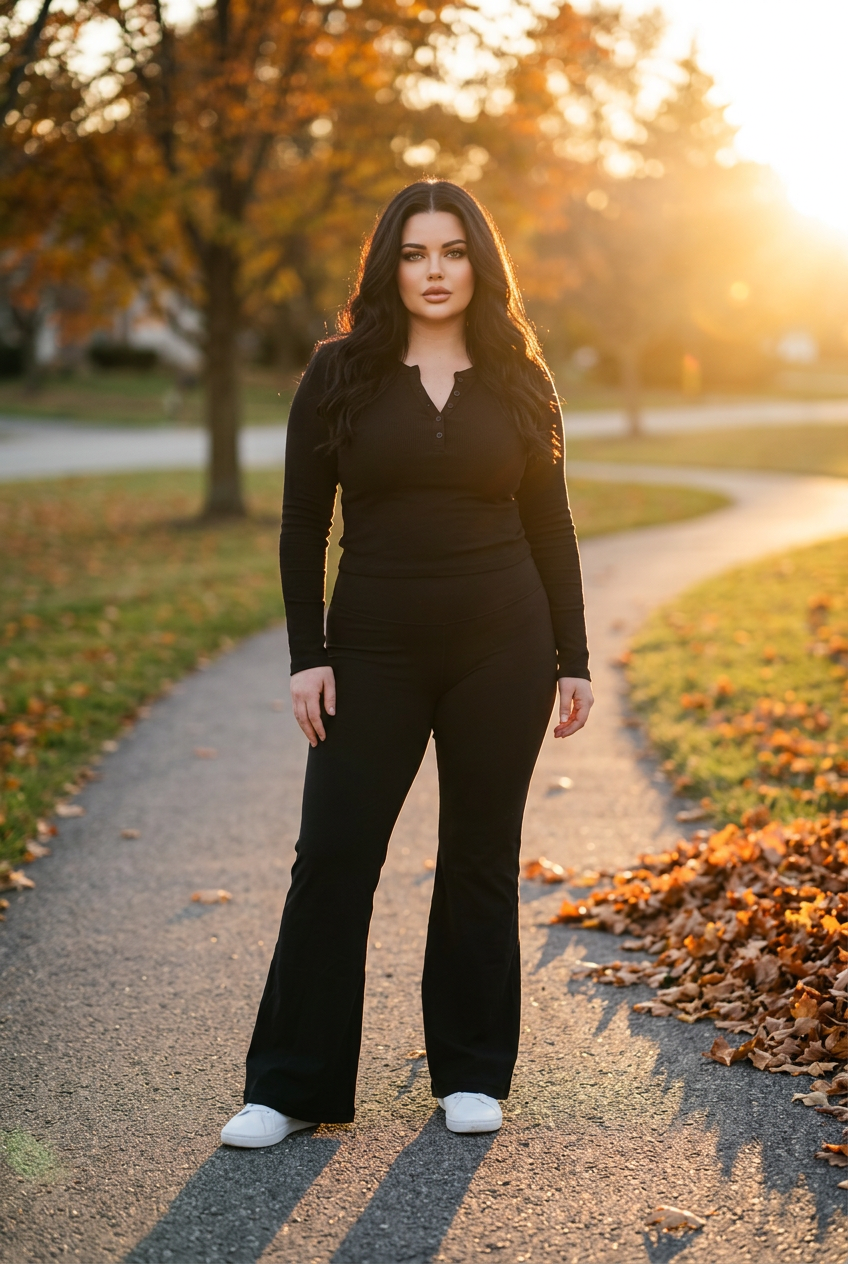
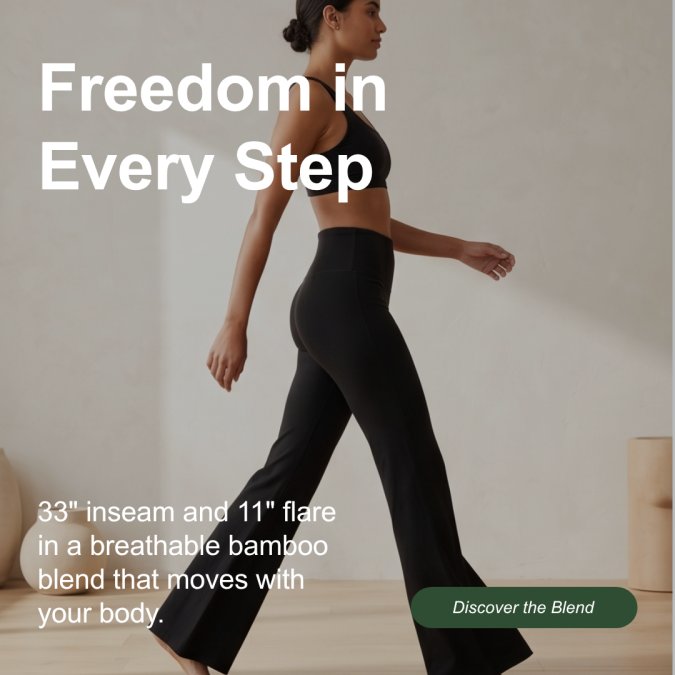
The Clare Flare is the best bamboo flare for breathable ease, and it's the pair to choose when you want airflow around the leg rather than a close fit. The 33-inch inseam gives it a graceful sweep, and the hem is fully cuttable without fraying, so you can set your own length at home.

Benefits of Bamboo Fiber Clothing for Sensitive Skin
Bamboo fiber clothing benefits sensitive skin because the fiber surface is smooth, so it glides rather than catches. That fiber smoothness reduces friction against the skin barrier, which is the first line of defense for anyone dealing with irritation.
The practical wins stack up:
- Moisture-wicking: bamboo pulls moisture away from skin instead of holding it there
- Breathable: airflow helps with thermoregulation, so you sweat less
- Anti-bacterial properties: odor-causing bacteria have a harder time settling in
- Hypoallergenic: natural fibers are gentler than many synthetic blends
- Soft-hand feel: the fabric drapes softly and gets softer with washing
Bamboo vs Organic Cotton for Sensitive Skin
Bamboo vs organic cotton for sensitive skin comes down to three things: fiber surface, moisture behavior, and how the fabric was processed. Bamboo is smoother and wicks faster; organic cotton is breathable and time-tested. The best bamboo pants often blend both, which is why Ecogoldencomfort builds its styles around bamboo and organic cotton rather than one alone.
Here's how they differ in practice:
| Factor | Bamboo | Organic Cotton |
|---|---|---|
| Feel | Silky, smooth-hand | Soft, slightly matte |
| Moisture | Wicks quickly | Absorbs, dries slower |
| Breathability | High | High |
| Odor resistance | Naturally anti-bacterial | Moderate |
| Durability | Strong, gets softer | Durable, can stiffen |
| Processing | Often viscose (see below) | Mechanical, no solvents |
The Processing Question Most Guides Skip
Here's the part almost no bamboo article explains: most "bamboo" fabric on the market is bamboo viscose, also called rayon from bamboo. The fiber starts as bamboo cellulose, but it's dissolved and regenerated using chemical solvents, most commonly carbon disulfide, before it becomes spinnable fiber. That step is what turns stiff bamboo stalk into the silky fabric your skin actually touches.
The solvent handling is where brands diverge:
- Closed-loop systems capture and reuse the majority of the solvent instead of venting it. This is the higher-standard process and the one to look for if manufacturing transparency matters to you.
- Open-loop systems release solvent as waste. The finished fabric can still be soft and skin-friendly, but the environmental profile is weaker.
Matching the Fabric to the Condition
"Sensitive skin" is not one thing, and the right fabric choice shifts depending on what you're managing:
Riko Sport Pant | Plum | Eco Golden →
- Eczema: barrier function is already compromised, so friction and trapped moisture are the main triggers. A smooth bamboo-organic cotton blend that wicks and doesn't cling tends to work better than a tight synthetic knit.
- Psoriasis: plaques are sensitive to rubbing and heat. Loose cuts with airflow, like a flare leg, reduce the mechanical irritation that close-fitting leggings can cause.
- Contact dermatitis: the trigger is usually a specific chemical, dye, or finish rather than the fiber. This is the case where certification matters most, because you're trying to rule out what's in the fabric, not just how it feels.
Durability: What 20+ Washes Actually Look Like
The other claim worth pressure-testing is longevity. Bamboo has a reputation for pilling and thinning, and that reputation is partly earned, but it's usually a care problem, not a fiber problem.
Across repeated washing, the pattern tends to be:
- Washes 1-5: fabric softens noticeably; this is the bamboo getting better, not wearing out.
- Washes 6-15: blends with organic cotton and a small amount of spandex hold shape well; pilling, if it appears, shows up first at the waistband and inner thigh where friction is highest.
- Washes 16-25+: cold-wash, air-dried bamboo blends typically keep their drape and smooth hand. Hot-washed, machine-dried pairs of the same fabric often show visible thinning and surface fuzz by this point.
How to Wash Bamboo Pants for Longevity
Washing bamboo pants for longevity is simple in principle: cold water, gentle cycle, air dry. But the why matters if you're buying bamboo for sensitive skin, because the same care habits that preserve the fabric also preserve the properties that make it gentle.
Why Heat Is the Real Enemy
Bamboo viscose fibers are spun from regenerated cellulose, and cellulose loses tensile strength when it's heated and agitated together. In a hot dryer, the fiber surface fibrillates, tiny fibers lift off the yarn, which is what you see as pilling and surface fuzz. Once that happens, the fabric is no longer smooth, and smoothness is the whole reason bamboo works for reactive skin.
The Wash Routine That Protects Both Fabric and Skin
- Turn pants inside out before washing to reduce surface abrasion
- Use cold water on a gentle or delicate cycle
- Skip fabric softener, it coats fibers and leaves residue against skin
- Avoid bleach and harsh detergents, especially anything with added fragrance or dyes
- Use a fragrance-free, dye-free detergent if you have contact dermatitis
- Lay flat or hang to air dry
- If ironing, use the lowest heat setting, or steam instead
The Detergent Variable Most Guides Ignore
If your skin reacts in bamboo pants that felt fine for the first month, the detergent is a more likely culprit than the fabric. Residue from scented detergent, fabric softener, or dryer sheets sits directly against skin all day. Switching to a fragrance-free, dye-free detergent and skipping softener entirely resolves a surprising share of "the fabric started irritating me" complaints, without replacing the pants.
What to Expect Over Time
Handled this way, quality bamboo pants hold their shape and softness for years, not months. Expect the fabric to get softer through the first several washes, hold its drape well past 20 cold-wash cycles, and only show wear at high-friction points like the waistband and inner thigh if it's going to show at all. Hot-washed, machine-dried pairs of the same fabric typically thin out far sooner, which is why care instructions are worth reading before you judge a pair's durability.
How We Evaluated These Bamboo Pants
We evaluated these bamboo pants on four criteria: fabric composition, waistband comfort, breathability, and durability after washing. Fiber content came first, since bamboo blended with organic cotton tends to be gentler than bamboo mixed with heavy synthetics.
Frequently Asked Questions
Is bamboo fabric good for sensitive skin?
Bamboo fabric is a strong choice for sensitive skin because its fibers are naturally smooth, which reduces friction against the skin barrier. Bamboo pants made from bamboo viscose or bamboo-organic cotton blends are breathable and moisture-wicking, so they keep sweat away from reactive areas. Many people with eczema or contact sensitivities find bamboo more comfortable than rougher synthetic blends. Look for pants described as hypoallergenic and free from harsh chemical finishes, and check for certifications like OEKO-TEX where available.
Which fabric is better for eczema, bamboo or cotton?
Both bamboo and organic cotton are gentle options, but they behave differently. Organic cotton is breathable and widely trusted, though it absorbs moisture more slowly and can feel damp against the skin. Bamboo fabric wicks moisture faster and has a smoother surface, which helps reduce friction and irritation. For eczema-prone skin, many people prefer bamboo pants because they stay drier and feel cooler. A bamboo and organic cotton blend can give you the softness of bamboo with the durability and familiarity of cotton.
What is the downside of bamboo fabric?
Bamboo fabric has a few trade-offs worth knowing. Most bamboo clothing is made through a chemical process that turns bamboo pulp into bamboo viscose, so transparency about manufacturing matters. Bamboo can also pill if washed roughly or dried on high heat. It may cost more than basic cotton because the fiber and processing are more involved. Finally, some bamboo pants run slightly loose after washing, so checking care instructions and sizing carefully helps you get a fit that lasts.
How do I wash bamboo pants so they last longer?
Wash bamboo pants in cold water on a gentle cycle with a mild detergent. Turn them inside out to reduce surface friction. Skip fabric softener and bleach, which break down the fibers. Air dry flat or hang to dry whenever possible; if you use a dryer, choose low heat and remove the pants while slightly damp. Following these laundry care instructions keeps the fabric soft, limits pilling, and helps your bamboo pants hold their shape and color for years.
Are bamboo pants worth the higher price?
Bamboo pants often cost more because the fiber and eco-conscious manufacturing take more resources. What you get in return is breathability, moisture management, and a soft-hand feel that synthetic blends rarely match. For sensitive skin, that comfort can matter more than a lower price tag. Bamboo also tends to get softer with each wash, so a well-cared-for pair can stay comfortable for a long time. Prioritize fabric content, fit, and care instructions over the lowest price.