
Benefits of Bamboo Cotton Blend: A Complete Guide

Table of Contents
- What Makes Bamboo Cotton Blend Different
- Breathability of Bamboo Fabric vs. Pure Cotton
- Why Bamboo Fiber Clothing Suits Sensitive Skin
- Durability and Shape Retention of the Blend
- The Environmental Footprint: Bamboo vs. Conventional Cotton
- Care Instructions for Bamboo Cotton Garments
- Bamboo Cotton Blend in Practice: From Desk to Downtime
- Conclusion
- Frequently Asked Questions
Last Updated: September 4, 2026
What Makes Bamboo Cotton Blend Different
A bamboo cotton blend combines bamboo-derived cellulose fibers with cotton to offer the strengths of both materials. Pure bamboo fiber is exceptionally soft and moisture-wicking but lacks structure, so manufacturers blend it with cotton to improve drape, durability, and affordability.
At Ecogoldencomfort, we have spent decades refining plant-based textiles, and this combination consistently outperforms single-fiber fabrics for everyday wear. Bamboo brings a silky hand-feel and natural temperature regulation, while cotton adds tensile strength and helps the garment hold its shape.
Not all bamboo cotton blends are created equal. The ratio matters, and so does the processing method. Some manufacturers use a viscose process with heavy chemical processing, while others, like our Eco Germ Gard line, prioritize cleaner production methods that preserve the fiber's natural benefits.
Breathability of Bamboo Fabric vs. Pure Cotton
Most articles stop at saying bamboo 'breathes better' than cotton. That claim is true, but it misses the mechanism, and the mechanism explains why the blend behaves differently.
Bamboo cellulose fiber is extruded into filaments with an irregular, often bean-shaped cross-section, creating natural micro-channels that pull moisture away from the skin through capillary action. Cotton, by contrast, has a hollow, ribbon-like structure that absorbs moisture into the fiber itself, which is why a cotton t-shirt feels wet and heavy after a workout.
A bamboo cotton blend, typically in a 60/40 or 70/30 bamboo-to-cotton ratio, preserves enough of those micro-channels to maintain a meaningful moisture-wicking advantage over pure cotton, while the cotton content adds structure and reduces the tendency of pure bamboo to cling when wet. The trade-off is real: a 100% bamboo jersey will wick faster than a 60/40 blend, but it will also stretch out of shape more readily. The blend is a deliberate compromise between wicking speed and dimensional stability.
The blend's advantage is most pronounced in high-humidity environments. In dry heat, both cotton and the blend evaporate sweat quickly, and the difference is marginal. In humid conditions, think a summer evening in Atlanta or a stuffy conference room in Washington, D.C., the blend's capillary action keeps moving moisture to the surface even when the air is already saturated, whereas cotton just absorbs and holds it. That is the difference between feeling damp and feeling dry.
Bamboo cellulose fibers are smoother and rounder than cotton fibers, which are twisted and irregular. When spun together, the yarn has fewer high-friction contact points against the skin, generating less heat and reducing the cling to damp skin that cotton exhibits.
Bamboo Lyocell, which uses a closed-loop solvent spinning process, produces a fiber with a more uniform cross-section and better moisture transport than bamboo viscose made via the older xanthate process. If breathability is your priority, look for garments labeled Lyocell or closed-loop processed rather than generic 'bamboo rayon.'
Why Bamboo Fiber Clothing Suits Sensitive Skin
Bamboo fiber clothing is naturally hypoallergenic, making it an excellent choice for women with sensitive skin or conditions like eczema. The smooth, round fiber creates less friction against the skin than rougher natural fibers or synthetics.
Skin irritation often comes from microscopic friction and trapped moisture, both of which bamboo fiber minimizes. Its antibacterial properties also reduce odor by limiting the bacteria that thrive in sweat.
For those concerned about hidden chemicals, the processing method deserves scrutiny. Many eco-conscious brands use organic cotton and bamboo processed through cleaner systems, but not all do. Look for transparency about dyeing and finishing processes; quality garments should feel soft without heavy chemical softeners and should not have a strong chemical smell on arrival.
Durability and Shape Retention of the Blend
The bamboo cotton blend delivers better durability than pure bamboo and better softness than pure cotton. Cotton fibers provide tensile strength that helps the fabric withstand the stress of regular wear, while bamboo contributes pilling resistance and shape retention that keeps garments looking polished.
In practice, this means your pants should hold their structure through a full day of sitting, standing, and moving. The blend resists the bagging that pure cotton can develop at the knees and seat, and it avoids the stretching that sometimes plagues bamboo-only knits.
A common issue with lower-quality bamboo garments is pilling. The cotton content in a well-made blend helps prevent this. Look for a higher cotton ratio for everyday durability, or a balanced blend if softness is your priority.
The Environmental Footprint: Bamboo vs. Conventional Cotton
The environmental story of bamboo cotton is not as simple as 'bamboo good, cotton bad.' The raw material is only half the equation. The processing method, and the specific blend ratio, determines whether a garment is genuinely sustainable or just greenwashed rayon.
The raw material advantage is real. Bamboo is a grass that grows 3 to 4 feet per day, reaches harvest maturity in 3 to 5 years, and regenerates from its own root system without replanting. It requires no irrigation in most regions and thrives without synthetic pesticides or fertilizers. Conventional cotton, by contrast, accounts for roughly 16% of global insecticide use despite occupying only about 2.4% of global cropland, per the Textile Exchange (textileexchange.org).
But the processing stage is where the story gets complicated. The vast majority of bamboo fabric on the market is bamboo viscose (also called bamboo rayon), made by dissolving bamboo cellulose in carbon disulfide and sodium hydroxide. This viscose process is chemically intensive and, in older or unregulated facilities, can release significant pollutants. The same process is used to make rayon from wood pulp, bamboo is not uniquely clean just because the plant grows sustainably.
The cleaner alternative is bamboo Lyocell, which uses a closed-loop solvent spinning process with N-methylmorpholine N-oxide. The solvent is recovered and reused at rates above 99%, and Lyocell produces a stronger, more uniform fiber than viscose (lenzing.com). The catch: Lyocell processing is more expensive, so garments typically cost 20% to 30% more than comparable viscose pieces.
The blend ratio also shifts the footprint. A 60/40 bamboo-to-cotton blend dilutes the processing impact of bamboo but carries the water and pesticide footprint of the cotton component. If the cotton is organically grown, that impact drops significantly, organic cotton uses 91% less blue water and 62% less energy than conventional cotton, per the Textile Exchange.
End-of-life is where the blend has a genuine advantage over synthetics, but with a caveat. Both bamboo cellulose and cotton will biodegrade under the right conditions, though the two fiber types degrade at slightly different rates, causing the fabric to fragment rather than dissolve uniformly. The bigger caveat is what else is in the garment: elastane, polyester thread, and synthetic dyes or finishes will not biodegrade. A garment labeled 'bamboo cotton' that contains 5% elastane is not fully compostable, and most municipal composting facilities will not accept textiles anyway.
What this means for your purchase decision: A bamboo Lyocell and organic cotton blend, produced in a facility with transparent wastewater treatment and certified by a third-party standard like GOTS or OEKO-TEX, is among the more environmentally responsible textile choices available. A bamboo viscose and conventional cotton blend from an unverified facility may have a footprint comparable to or worse than conventional cotton alone. Processing transparency matters more than the raw material.
Care Instructions for Bamboo Cotton Garments
Proper care for bamboo cotton is straightforward but essential. Wash in cold water on a gentle cycle, and avoid fabric softeners that can coat the fibers and reduce their natural moisture-wicking ability.
Air drying is the single best thing you can do for these garments. The heat from a dryer can gradually break down the cellulose fibers and cause shrinkage. If you must use a dryer, choose the lowest heat setting and remove the garment while still slightly damp.
A simple care routine keeps your bamboo cotton blend performing at its best:
- Turn the garment inside out before washing to protect the outer surface
- Use a mild, plant-based detergent free of optical brighteners
- Wash with like colors in cold water
- Lay flat or hang to dry away from direct sunlight
- Iron on low heat if needed, or steam to remove wrinkles
These care steps are no more demanding than for other quality fabrics, but following them consistently will extend the life of your garments considerably.
Bamboo Cotton Blend in Practice: From Desk to Downtime
The real test of any fabric is how it performs across a full day of real life. For women working from home, the demands are specific: comfort during long hours at a computer, breathability during video calls, and a polished look that transitions to errands or evening relaxation without a wardrobe change.
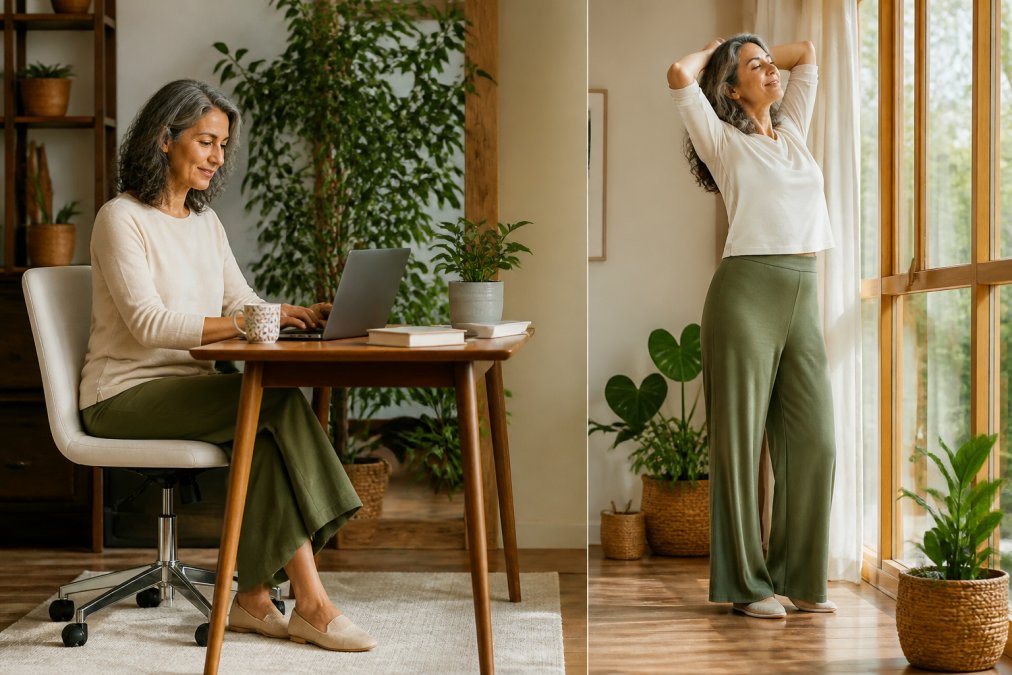
This is where the bamboo cotton blend earns its place in a daily wardrobe. The fabric moves with the body, and natural breathability prevents the overheated, clammy feeling of synthetic loungewear. The Clare Utility Flare from Ecogoldencomfort exemplifies this versatility, pairing eco-friendly bamboo fabric with practical pockets for a wear-anywhere design.
The Umi Jogger offers a similar blend of bamboo and organic cotton in a semi-fitted silhouette, ideal for days when you want the ease of a jogger with the polish of a tailored piece. For those who prefer a high-rise fit, the Riko Sport Pant delivers the same natural softness with a 31-inch inseam that flatters and supports.
| Garment | Best For | Key Feature | Price |
|---|---|---|---|
| Clare Utility Flare | Desk to downtime | Utility pockets, flowing flare | $79.00 |
| Umi Jogger | Casual comfort | Semi-fitted, signature blue | $55.00 |
| Riko Sport Pant | Errands and studio | High-rise, 31-inch inseam | $60.00 |
Each piece is crafted from plant-based materials, reflecting a commitment to garments that move comfortably while minimizing environmental impact. The durability of the blend means these are long-term additions to a mindful wardrobe, not seasonal purchases.
Textile Exchange preferred fiber and materials market report
Conclusion
Choosing a bamboo cotton blend comes down to understanding what the fabric does well: it breathes, it lasts, and it treats both your skin and the planet with respect. For women seeking comfort wear that performs across a full day, this blend offers a compelling alternative to synthetics and conventional cotton.
Ecogoldencomfort brings decades of manufacturing expertise to every garment, prioritizing real comfort and durability over fleeting trends. Our collection of bamboo and organic cotton pants is designed for women who value quality, wellness, and responsible fashion. Explore the Ecogoldencomfort bamboo pant collection to find the fit that moves with your life.
Frequently Asked Questions
What is the downside of bamboo fabric?
The main downside relates to processing. Most bamboo fabric is made using the viscose process, which involves chemicals. However, when bamboo is blended with organic cotton, the resulting fabric is durable and less prone to pilling than pure bamboo. Look for brands that are transparent about their manufacturing or that use a closed-loop process to minimize environmental impact.
Is a bamboo cotton blend better for sensitive skin than pure cotton?
Yes, for many people. Bamboo fibers are naturally rounder and smoother than cotton fibers, which are twisted and flat. This means bamboo cotton blend fabric creates less friction against the skin, reducing irritation. The blend is also highly breathable and moisture-wicking, which helps prevent the damp conditions that can aggravate conditions like eczema.
Does bamboo cotton blend fabric shrink more than 100% cotton?
No, a bamboo cotton blend generally shrinks less than 100% cotton. Cotton fibers are prone to contracting when washed in hot water. Adding bamboo, a cellulose fiber, improves the fabric's dimensional stability. To maintain shape, always follow the care instructions for bamboo cotton: wash in cold water on a gentle cycle and lay flat to dry.
How do I care for bamboo cotton clothing?
Wash bamboo cotton garments in cold water with similar colors on a gentle cycle. Use a mild, plant-based detergent free of optical brighteners and bleach. Avoid fabric softeners, as they coat the fibers and reduce breathability. For drying, lay the garment flat to preserve its shape, and use a cool iron if needed.
The challenge is finding apparel that truly delivers on both comfort and sustainability claims. Ecogoldencomfort answers this with plant-based materials, eco-friendly packaging, and a refined approach to design that honors the body and the environment. Get started with Ecogoldencomfort and experience natural softness that lasts.