

How to Identify Non Toxic Clothing: A 2026 Guide

Table of Contents
- What Are Toxic Chemicals in Clothing?
- The Dangers of Synthetic Dyes in Clothing
- Simple Home Tests to Identify Non Toxic Clothing
- How to Wash New Clothes to Remove Chemicals
- Frequently Asked Questions
Last Updated: September 4, 2026
When you pull a new garment off the rack, it carries more than just a price tag. Many conventional fabrics undergo intensive processing that leaves behind chemical residues, from formaldehyde-based finishing agents to azo dyes and PFAS treatments. Learning how to identify non toxic clothing starts with understanding that "non toxic" is a measurable standard of what touches your skin.
A garment's label lists fiber content but rarely discloses the substances used for wrinkle resistance, water repellency, or vibrant hue. Below, we show you how to inspect, test, and wash your way to a safer wardrobe.
What Are Toxic Chemicals in Clothing?
Toxic chemicals in clothing are substances applied during textile processing that can be absorbed through the skin or inhaled as VOCs. These include formaldehyde for wrinkle prevention, chlorinated phenols as preservatives, heavy metals in dye accelerants, and PFAS for water-repellent finishes.
Residues do not simply wash out after one cycle. Some compounds bind to the fiber structure and release gradually over months of wear.
The Dangers of Synthetic Dyes in Clothing
Synthetic dyes, particularly azo dyes, represent one of the most widespread chemical exposures in everyday apparel. Azo dyes are favored for their colorfastness and low cost, but certain formulations can break down and release aromatic amines, substances that regulatory bodies have scrutinized for their health implications (PubMed). The Environmental Working Group's guide to textile chemicals highlights that the dyeing process also consumes significant water resources, often leaving untreated effluent in producing regions.
Deep blacks, navy blues, and bright reds typically require higher dye loads and more chemical fixatives to prevent color bleeding, which is why many with sensitive skin report reactions to new dark garments. Low-impact dyes have higher absorption rates and require fewer heavy-metal mordants.
Simple Home Tests to Identify Non Toxic Clothing
You do not need a laboratory to screen your wardrobe. Several reliable home tests can reveal problematic chemical treatments before a garment touches your skin.
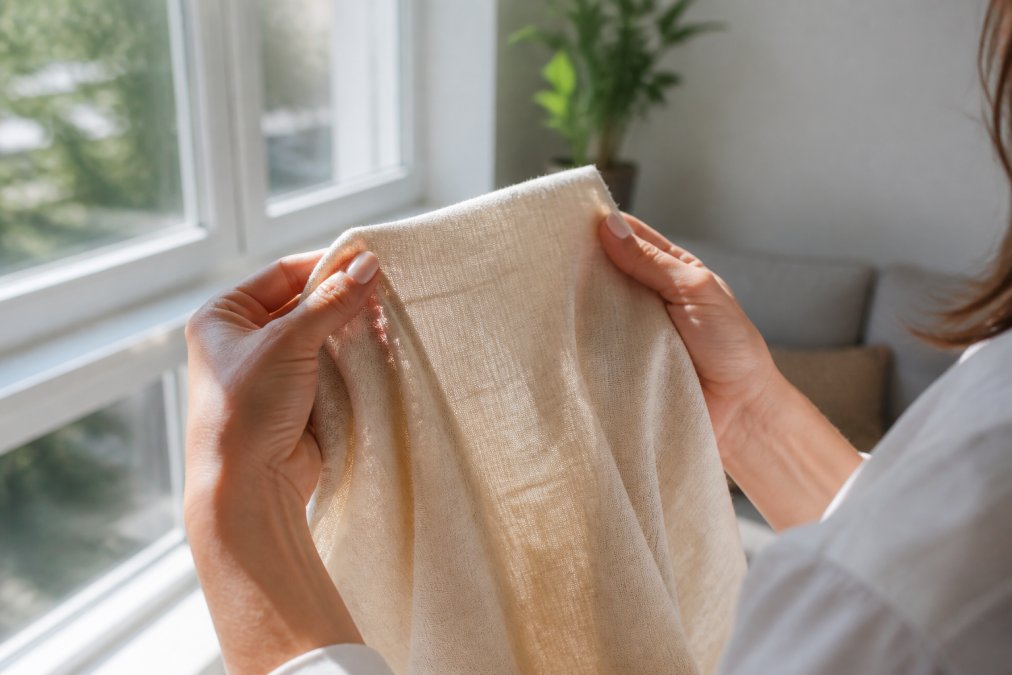
The Sniff Test: Unwrap the garment and bring it close to your nose. A distinct chemical odor, often described as "new car smell" or sharp and acrid, signals VOCs or formaldehyde-based finishing agents. Natural fabrics like organic cotton and bamboo should smell like nothing at all, or at most, faintly of the earth.

The Water Test: Place a small corner of the fabric in a glass of clear, room-temperature water for an hour. Significant color bleeding that tints the water suggests poorly fixed dyes, which can transfer onto your skin when you sweat. This is a red flag for azo dye use without adequate washing during manufacturing.
The Burn Test: Clip a small thread from an interior seam. Natural fibers like cotton and bamboo burn to a fine, gray ash that crumbles easily and smells like burning paper. Synthetic fibers such as polyester melt, bead up into a hard plastic-like ball, and emit a sharp, acrid odor. This test instantly reveals whether the fiber content on the label matches reality.
The Rub Test: Firmly rub a white, damp cloth across the surface of the garment. If color transfers readily, the fabric has poor dye fixation and will likely leach onto your skin, particularly where clothing rubs against damp skin.
| Test | What It Detects | Red Flag Result |
|---|---|---|
| Sniff Test | VOCs, formaldehyde finishing | Chemical or acrid odor |
| Water Test | Poorly fixed dyes | Water tinted after 1 hour |
| Burn Test | Fiber authenticity | Beading plastic, acrid smoke |
| Rub Test | Dye transfer risk | Color on damp white cloth |
How to Wash New Clothes to Remove Chemicals
Washing new clothes before wearing is the single most effective step to reduce chemical exposure, but technique matters. The goal is to encourage hydrolysis, the process by which water breaks down chemical bonds, and to physically flush released agents away from the fibers.
Start by turning the garment inside out to expose the surface that rests against your skin to the most agitation. Use a gentle, fragrance-free detergent, as fragrance itself is a common irritant. Add one cup of white vinegar to the rinse cycle; the mild acetic acid helps break down alkaline residues and neutralizes odors without damaging natural fibers.
Wash in warm water, not hot, for a full cycle. Warm water accelerates the release of finishing agents without the risk of setting stains or shrinking natural blends (peer-reviewed research). Run an extra rinse cycle to ensure no detergent or loosened residue remains. Air dry when possible, as the heat of a mechanical dryer can re-bond certain chemical finishes to the fiber structure.
Choosing garments made from certified organic fibers reduces the initial chemical load dramatically. Third-party certifications like GOTS and OEKO-TEX provide independent verification that the finished product has been tested for a broad range of harmful substances.
The path to a non toxic wardrobe is not about paranoia; it is about informed habits. Start with the tests above, wash everything before its first wear, and prioritize natural fibers from transparent supply chains whenever your budget allows.

Ecogoldencomfort builds every pair of pants from sustainable bamboo and organic cotton blends that are naturally breathable and soft, without relying on chemical treatments. Get started with Ecogoldencomfort and experience the difference of clothing that prioritizes your wellness.
Frequently Asked Questions
What is the most common toxic chemical found in clothing?
Formaldehyde is one of the most common chemical residues found on new garments. Manufacturers often use it as a finishing agent to prevent wrinkles, mold, and mildew during shipping. Other frequent offenders include azo dyes, which can release aromatic amines, and PFAS used for water-repellent finishes. These chemicals can linger on fabric and come into contact with your skin, which is why washing new items before wearing is a smart first step toward non toxic clothing.
Is 100% cotton still toxic?
Yes, 100% cotton can still contain residues. Conventional cotton farming uses heavy pesticides, and the manufacturing process often adds formaldehyde, ammonia, and synthetic dyes. Even natural fibers can be treated with finishing agents that irritate sensitive skin. To ensure your cotton is safer, look for a GOTS certification, which verifies organic farming and restricts harmful inputs. Organic cotton with third-party certification is a more reliable choice for non toxic clothing.
How do I check if my clothing is OEKO-TEX certified?
Look for the OEKO-TEX label, usually a white tag sewn into the seam or printed on the care label. The Standard 100 certification means every component, from the thread to the buttons, has been tested against a list of over 100 harmful substances. You can also check the OEKO-TEX website with the product's certificate number for verification. This certification is a strong indicator that a garment is free from concerning levels of chemicals.
This article was written using GrandRanker