
Why Bamboo Fabric Breathes Better Than Cotton

Table of Contents
- How Bamboo Fiber Structure Creates Natural Airflow
- Bamboo vs Organic Cotton Breathability: A Direct Comparison
- Moisture-Wicking Properties of Bamboo Explained
- Benefits of Bamboo Fabric for Sensitive Skin
- Thermal Regulation: How Bamboo Keeps You Cool
- Viscose vs Lyocell: Processing Impact on Breathability
- Fabric Density, GSM, and Weave for Maximum Comfort
- Caring for Bamboo Fabric to Maintain Breathability
- Frequently Asked Questions
Last Updated: September 12, 2026
How Bamboo Fiber Structure Creates Natural Airflow
Why bamboo fabric breathes better than cotton comes down to what happens at the microscopic level. Bamboo fibers contain a natural micro-gap structure that lets air pass through the fabric rather than sitting on top of it. At Ecogoldencomfort, we've spent decades working with bamboo blends, and the fiber itself is the reason the fabric feels cooler against your skin.
The Micro-Gap and Hollow Fiber Advantage
Bamboo fiber is a hollow fiber. That hollow core, combined with tiny gaps along the fiber's length, creates natural channels for air circulation. Cotton fibers are solid and flat by comparison, so they trap air in a single layer rather than moving it through the fabric. The hollow structure also makes bamboo lighter per square meter, which matters when you're wearing pants through a long day.
How Fiber Cross-Section Affects Breathability
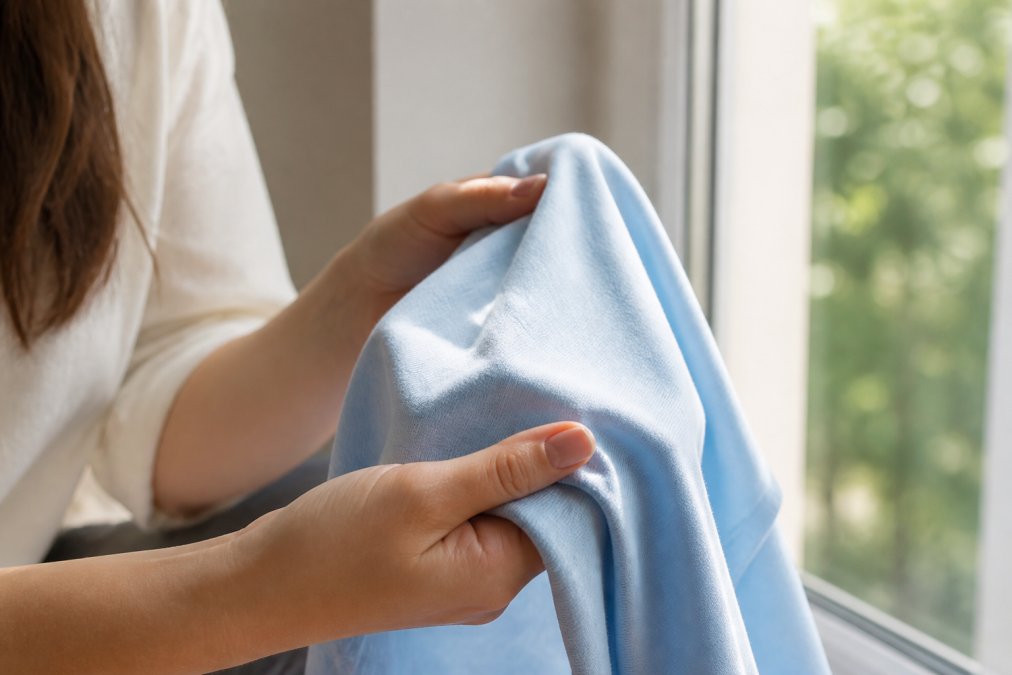
The fiber cross-section of bamboo is irregular and rounded rather than flat, which increases the total surface area available for air and moisture to move through. This is basic textile engineering: more surface area means faster moisture transport and quicker heat dissipation. Flat, ribbon-like cotton fibers stack tightly against each other, which is why cotton can feel damp and heavy once you start moving.
Bamboo vs Organic Cotton Breathability: A Direct Comparison
Organic cotton has real strengths, and it's a fiber we use in our own blends. But on breathability, the comparison favors bamboo. Bamboo fabric absorbs moisture faster and releases it into the air sooner, while organic cotton holds onto that moisture longer. For anyone who runs warm or works from home all day, that difference shows up in how the garment feels by mid-afternoon.
| Property | Bamboo Fabric | Organic Cotton |
|---|---|---|
| Fiber structure | Hollow, micro-gap channels | Solid, flat ribbon |
| Moisture absorbency | Fast uptake | Moderate uptake |
| Drying time | Quick | Slower |
| Air circulation | High | Moderate |
| Feel when damp | Light, dry | Heavier, clingy |
Moisture Absorbency Rate and Drying Time
Absorbency rate describes how quickly a fabric pulls moisture away from your skin. Bamboo's hollow fibers wick sweat toward the fabric's outer surface, where it evaporates. Organic cotton absorbs well too, but it holds water inside the fiber, so the garment stays wet against your body. That's the practical reason a bamboo blend can feel dry while a cotton pant feels clammy after the same walk.
Moisture-Wicking Properties of Bamboo Explained
Moisture-wicking means moving sweat away from skin and spreading it out so it evaporates. Bamboo does this through capillary action inside its hollow fibers. The moisture travels along the fiber, spreads across the fabric surface, and dries from the outside in. This is why bamboo is common in activewear and lounge wear: the fabric manages moisture instead of soaking it up and staying heavy.
Sweat Evaporation and Moisture Transport
Sweat evaporation depends on airflow across the fabric surface. Because bamboo's micro-gaps allow air to move through the weave, evaporative cooling happens faster than it does with a tightly woven cotton. Fabric density plays a role here too. A looser weave with the same fiber moves more air, so two bamboo pants can perform differently depending on how they're knit.
Benefits of Bamboo Fabric for Sensitive Skin
For sensitive skin, the benefits of bamboo fabric come from two things: softness and low irritation potential. Bamboo fibers are smooth and rounded, so they don't create the friction that rougher fibers can cause against skin. Many people with sensory sensitivities find bamboo blends feel calmer against the body than standard cotton.
Hypoallergenic Qualities and Skin Temperature
Hypoallergenic means a fabric is unlikely to trigger allergic reactions. Because bamboo fibers are smooth and absorb moisture quickly, they don't hold sweat against skin, which helps reduce the damp environment where irritation can develop. Skin temperature also stays more stable, since the fabric moves heat away rather than trapping it.
- Smooth, rounded fibers reduce friction
- Fast moisture uptake keeps skin drier
- Better airflow helps regulate skin temperature
- Plant-based blends suit reactive skin
Thermal Regulation: How Bamboo Keeps You Cool
Thermal regulation is the fabric's ability to help your body hold a comfortable temperature. Bamboo fibers support thermoregulation because they move both heat and moisture. When you're warm, sweat evaporates faster and heat dissipates through the hollow fibers. This is the same principle behind moisture management in performance textiles, just achieved with a plant-based fiber.
Viscose vs Lyocell: Processing Impact on Breathability
Most bamboo fabric on the market is not woven from a stalk pulled out of the ground. Bamboo cellulose has to be dissolved and regenerated into a spinnable fiber, and the two dominant routes, viscose and lyocell, produce fibers with measurably different physical structure. That difference shows up in how the finished garment breathes.
The Viscose Route
Bamboo viscose (often labeled simply "bamboo rayon") dissolves bamboo cellulose in a caustic soda and carbon disulfide solution, then extrudes the dissolved pulp through spinnerets into an acid bath that regenerates the fiber (the FTC). The process works, but it is chemically intensive, and the resulting fiber can vary in diameter and cross-section from batch to batch. A less uniform fiber means a less predictable pore structure in the finished yarn, some sections of the fabric end up denser than others, and airflow follows the path of least resistance rather than moving evenly through the textile.
The Lyocell Route
Bamboo lyocell uses an amine oxide solvent (commonly NMMO) in a closed-loop system that recovers and reuses the vast majority of the solvent rather than discharging it (the EPA). The fiber that comes out is more consistent in denier and cross-section, which matters for breathability because uniform fibers pack into a more regular yarn structure. Regular structure means regular micro-gaps, and regular micro-gaps mean air and moisture move through the fabric the way the engineering predicts instead of channeling through weak spots.
What This Means for the Fabric You Buy
| Factor | Bamboo Viscose | Bamboo Lyocell |
|---|---|---|
| Solvent system | Caustic soda + carbon disulfide | Amine oxide (NMMO), closed-loop |
| Fiber consistency | Variable | More uniform |
| Airflow predictability | Moderate | Higher |
| Performance after repeated washing | Can degrade faster | Holds structure longer |
| Typical label wording | "Bamboo rayon," "bamboo viscose" | "Lyocell," "bamboo lyocell" |
The Marketing-vs-Reality Nuance
A common claim is that bamboo fabric is inherently breathable because the plant grew that way. That is only half true. The bamboo plant's natural structure does not survive the regeneration process intact, what survives is cellulose, and the breathability of the finished fabric depends heavily on how that cellulose was spun, how the yarn was knit, and how the garment was finished. A well-made bamboo lyocell jersey can outperform a poorly made bamboo viscose twill on airflow, even though both started from the same plant. This is why "bamboo" alone on a label tells you almost nothing about performance.
Fabric Density, GSM, and Weave for Maximum Comfort
Here is the part most bamboo articles skip: the fiber is only half the story. Two garments made from identical bamboo lyocell yarn can breathe very differently depending on how the fabric was constructed. Weight and weave are the variables that turn a breathable fiber into a breathable garment, or waste it.
GSM: What the Number Actually Tells You
GSM stands for grams per square meter, and it is the single most useful spec for predicting how a fabric will feel against your skin. Lower GSM means less material per unit area, which generally means more open space for air to move through. Higher GSM means more material, more warmth, and more structure.
| GSM Range | Weight Feel | Typical Use | Breathability Profile |
|---|---|---|---|
| 120-150 | Very light, sheer | Summer tops, sleepwear | Highest airflow |
| 150-180 | Light | T-shirts, tanks, lounge | High airflow |
| 180-220 | Midweight | Year-round tees, joggers | Balanced |
| 220-280 | Heavyweight | Hoodies, structured pants | Lower airflow, more warmth |
| 280+ | Substantial | Outerwear, heavy knits | Lowest airflow |
A 140 GSM bamboo jersey will feel dramatically cooler than a 260 GSM bamboo fleece, even though both are "bamboo." If breathability is the goal, GSM is the first number to check.
Weave and Knit Structure Matter Just as Much
GSM tells you how much fiber is in the fabric. Weave tells you how that fiber is arranged, and arrangement controls airflow.
- Single jersey knit, the most common knit for t-shirts and lightweight pants. One layer of loops, relatively open, high airflow. This is the construction that lets bamboo's micro-gaps actually do their job.
- Interlock or double knit, two layers of loops interlocked. Denser, more stable, less airflow. Common in heavier joggers and structured tops.
- Rib knit, vertical ridges that stretch well but create uneven airflow; breathable in the valleys, tighter at the ridges.
- Twill or woven, used in shirting and structured pants. Tight interlacing, low airflow, high durability. A bamboo twill will feel much warmer than a bamboo jersey at the same GSM.
- French terry, loops on one side, flat on the other. Midweight, moderate airflow, common in sweatshirts and joggers.
Why This Beats Fiber-Only Marketing
A brand can truthfully say a garment is "100% bamboo" and still sell you something that feels clammy, because the fiber was knit into a dense interlock at 280 GSM. The reverse is also true: a bamboo-cotton blend in an open single jersey at 160 GSM can outperform a pure bamboo garment on airflow. Fiber type sets the ceiling; construction determines whether you actually reach it.
Matching Construction to Use
- Hot weather and lounging: 140-180 GSM single jersey or lightweight rib.
- Year-round daily wear: 180-220 GSM jersey or French terry.
- Cooler days and structure: 220-280 GSM interlock, French terry, or twill, accept lower airflow in exchange for warmth and shape.
The takeaway is simple: bamboo's hollow fiber gives you a head start on breathability, but the knit and the GSM decide how much of that advantage survives into the finished garment.
Caring for Bamboo Fabric to Maintain Breathability
Breathability fades if the fabric gets clogged or damaged. Fabric softener leaves a waxy film on fibers that blocks the micro-gaps, and high heat breaks down fiber structure over time (PubMed). To keep bamboo performing:
- Wash in cold water on a gentle cycle
- Skip fabric softener and dryer sheets
- Air dry or tumble on low heat
- Turn garments inside out to reduce pilling
- Store folded rather than on wire hangers
Follow those steps and a quality bamboo blend keeps its airflow and softness through regular washing and wearing.
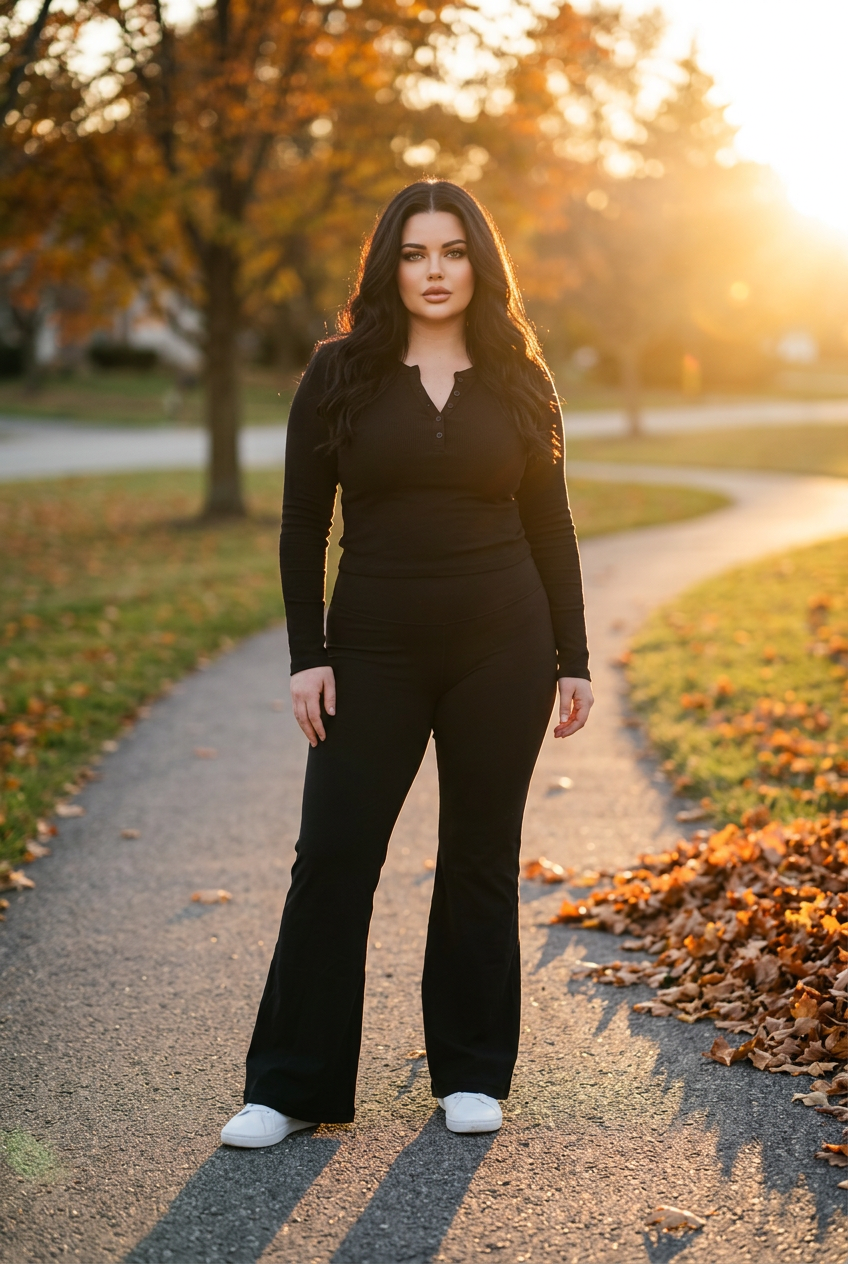
If you want to feel the difference for yourself, our Umi Jogger and Riko Sport Pant are built from a bamboo, organic cotton, and spandex blend designed to move with you and breathe all day.

Frequently Asked Questions
Is bamboo fabric actually breathable?
Yes. Bamboo fabric is highly breathable because its fibers have a unique micro-gap structure and hollow cross-section that allow air to circulate freely. This design also helps moisture move away from your skin, so you stay dry and comfortable. Independent textile studies show bamboo viscose absorbs moisture faster than cotton, making it a strong choice for everyday wear, especially in warm or humid conditions.
Does bamboo breathe better than cotton?
In most cases, yes. Bamboo fabric typically outperforms cotton in breathability due to its hollow fiber structure and higher moisture absorbency rate. While organic cotton is also breathable, bamboo's natural thermoregulation and faster sweat evaporation give it an edge for activewear and sensitive skin. The difference is most noticeable during physical activity or in humid weather when moisture management matters most.
What is the downside of bamboo fabric?
Also, bamboo fabric can pill if washed roughly, so proper care is essential to maintain its softness and performance over time.
How does bamboo viscose regulate body temperature?
Bamboo viscose regulates body temperature through its hollow fiber structure, which traps air in warm conditions and releases heat when needed. This thermoregulation helps keep your skin temperature stable. The fibers also wick moisture away from your body, and as that moisture evaporates, it creates a cooling effect. This makes bamboo viscose ideal for year-round comfort, from summer heat to indoor heating.
Finding pants that genuinely breathe, hold up to daily wear, and feel good against sensitive skin is harder than it should be. Ecogoldencomfort makes it simpler with plant-based bamboo and organic cotton blends, decades of manufacturing experience, and eco-friendly packaging. Explore the collection and see what real comfort feels like. Shop Ecogoldencomfort and find your new everyday essential.