
Bamboo Clothing Benefits for Skin Health

Table of Contents
- Why Bamboo Clothing Benefits Skin Health
- Bamboo Clothing Moisture-Wicking Benefits
- Bamboo vs Organic Cotton for Sensitive Skin
- Is Bamboo Fabric Breathable for Eczema
- Antibacterial and Odor-Resistant Properties
- How to Choose Bamboo Clothing for Your Skin Type
- Frequently Asked Questions
Last Updated: September 22, 2026
Why Bamboo Clothing Benefits Skin Health
When you slip on a pair of bamboo pants, your skin notices immediately. The difference between bamboo clothing benefits for skin health and conventional synthetic fabrics comes down to how the material interacts with your body's largest organ. Bamboo fabric is naturally hypoallergenic, moisture-wicking, and breathable in ways that cotton alone cannot match. At Ecogoldencomfort, we've spent decades understanding how fabric composition directly impacts comfort.
The science is straightforward: bamboo fibers are smoother and rounder than cotton or synthetic alternatives, creating less friction against skin. This micro-level difference translates to real relief for anyone who's experienced the constant irritation of rough fabrics throughout the day. Unlike conventional clothing that traps moisture and heat, bamboo naturally regulates temperature and pulls sweat away from your skin before it can cause discomfort or bacterial growth.
What makes bamboo clothing particularly valuable for skin health is its combination of properties working together. The fabric breathes while remaining soft. It resists odor naturally without chemical treatments. It maintains these benefits through dozens of washes. For women dealing with sensory sensitivities or chronic skin conditions, this isn't a luxury feature, it's the difference between managing symptoms and constant discomfort.
Bamboo Clothing Moisture-Wicking Benefits
Moisture-wicking is the ability of a fabric to pull sweat and moisture away from your skin and move it to the outer surface where it can evaporate. Bamboo excels at this because of its hollow fiber structure, which naturally absorbs and releases moisture far more efficiently than cotton or polyester blends.
When you wear conventional clothing, sweat sits against your skin. This creates an environment where bacteria thrive, odor develops, and skin irritation accelerates. Bamboo clothing benefits for skin health specifically because it interrupts this cycle. The fabric absorbs moisture quickly, then releases it to the outer layer where air can evaporate it. Your skin stays dry. The bacteria that cause odor and infection have nowhere to flourish.
This matters more than marketing materials suggest. For women working from home, managing eczema flare-ups, or simply wanting to avoid the constant dampness of synthetic fabrics, moisture-wicking isn't a nice-to-have feature, it's foundational to daily comfort. Many women report that switching to moisture-wicking bamboo pants eliminates the need for frequent clothing changes throughout the day.
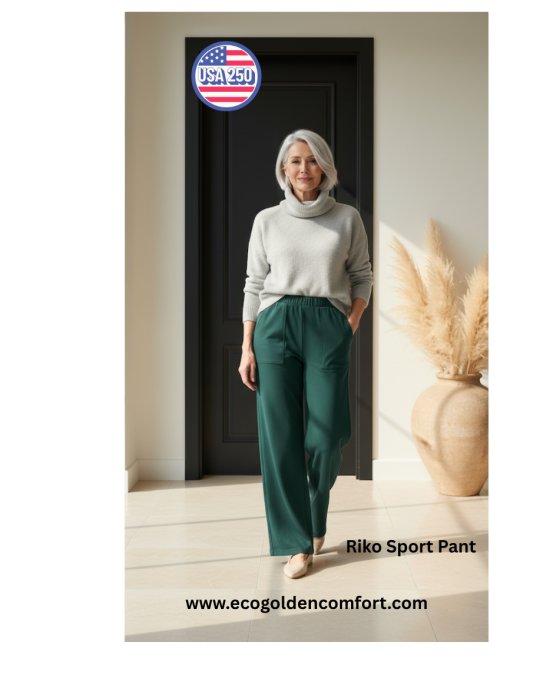
The Riko Sport Pant from Ecogoldencomfort combines bamboo with organic cotton and spandex specifically to enhance moisture management while maintaining breathability. The blend ensures moisture moves away from skin quickly, preventing the damp-fabric irritation that triggers flare-ups in sensitive skin conditions.

Bamboo vs Organic Cotton for Sensitive Skin
Both bamboo and organic cotton are plant-based fibers, but they behave differently against sensitive skin. Organic cotton is breathable and free from synthetic pesticides, which makes it a solid choice. Bamboo, however, has structural advantages that matter for skin health.
Organic cotton fibers are relatively rough at the microscopic level. They have an irregular surface that, while natural, creates more friction against delicate skin. Bamboo fibers are smooth and round, minimizing micro-abrasions that accumulate over hours of wear. For someone with sensitive skin, this difference can lead to less irritation.
Cotton also requires more water to grow and process. Bamboo grows rapidly without pesticides and regenerates quickly. From a sustainability standpoint, bamboo clothing benefits both your skin and the environment simultaneously. Many women who prioritize eco-conscious choices find that bamboo aligns with their values in ways organic cotton alone doesn't.
The moisture-wicking comparison is equally clear. Cotton absorbs moisture but doesn't release it as efficiently as bamboo. This means cotton can feel damp against your skin for longer periods. Bamboo moves moisture away faster, keeping your skin drier and reducing the environment where irritants thrive.
Blended fabrics, like the bamboo and organic cotton combinations Ecogoldencomfort uses, capture the best of both materials. You get the proven breathability of cotton with the smoothness and moisture-wicking of bamboo. This hybrid approach addresses the limitations of either fiber alone.
Is Bamboo Fabric Breathable for Eczema
Breathability for eczema management isn't just about "letting air in", it's about how fabric structure prevents the specific conditions that trigger inflammatory flare-ups. Understanding the mechanics reveals why bamboo outperforms conventional fibers at the dermatological level.
Fiber Structure and Air Permeability: Bamboo fibers are naturally hollow and have a round, smooth cross-section. This geometry creates consistent air channels throughout the fabric weave. Cotton fibers, by contrast, are solid and irregularly shaped, which creates uneven air gaps and pockets where moisture can become trapped. Synthetic polyester fibers are even denser, offering minimal air permeability. The result: bamboo allows more air circulation than standard cotton at the same fabric weight.
Clare Flare | Sustainable Bamboo Flare →
For eczema patients, this air circulation directly reduces the microclimate temperature against skin. Elevated skin temperature can accelerate histamine release and intensify itching in atopic dermatitis. By maintaining a cooler microclimate, breathable bamboo fabric can help reduce this physiological trigger.
Moisture Management and Barrier Function: Eczema involves a compromised skin barrier, the stratum corneum loses water faster than healthy skin, and external irritants penetrate more easily (Significance of Skin Barrier Dysfunction in Atopic Dermatitis). When fabric traps moisture against the skin, it creates two problems: (1) the skin becomes macerated (waterlogged), which further weakens barrier function, and (2) bacteria and fungi thrive in the warm, damp environment, triggering secondary infections that worsen inflammation.
Bamboo's hollow fiber structure absorbs moisture rapidly but releases it to the outer fabric surface where evaporation occurs. This keeps the skin surface dry without over-drying it, a critical balance. Cotton absorbs moisture but releases it slowly, meaning your skin stays damp for extended periods. Synthetic fabrics repel moisture entirely, causing sweat to pool against skin instead of evaporating, which is why many eczema patients report worsening symptoms in polyester clothing.
Thermal Regulation and Flare-Up Prevention: Bamboo fabric can help maintain a cooler temperature than your skin surface, even during physical activity. The fabric absorbs body heat and disperses it through air circulation rather than trapping it. For eczema patients, this prevents the overheating that intensifies the itch-scratch cycle, which is the primary driver of flare-up severity and duration.
Many women with eczema report that conventional fabrics feel restrictive during flare-ups, the sensation of fabric against inflamed skin becomes unbearable. Bamboo's smoothness (discussed in the introduction) combined with its breathability creates a fabric that feels less irritating even when skin is actively inflamed. The reduced friction plus improved air circulation means fewer triggers during the most vulnerable periods.
Practical Flare-Up Management: During active eczema flare-ups, loose-fitting bamboo clothing prevents the additional friction and heat buildup that tight synthetic fabrics create. The Riko Sport Pant's design, with its soft waistband and flat seams, eliminates pressure points that would otherwise irritate already-sensitive skin. Pairing breathable bamboo with proper moisture management (changing out of damp clothing quickly) creates an environment where flare-ups resolve faster and recur less frequently.
The thermal regulation properties of bamboo are particularly valuable during sleep, when many eczema patients experience peak itching. Bamboo bedding and sleepwear can help maintain a cooler, drier microclimate throughout the night, which can reduce nocturnal scratching and improve sleep quality.
Antibacterial and Odor-Resistant Properties
Bamboo contains a naturally occurring antimicrobial agent called bamboo kun, which suppresses bacterial growth without synthetic chemical coatings.
Bamboo fabric is produced through two primary methods: the viscose (rayon) process and the lyocell process.
How to Choose Bamboo Clothing for Your Skin Type
Selecting the right bamboo clothing for your specific skin needs requires understanding your primary concern: sensitivity, moisture management, temperature regulation, or durability. Start by identifying which factor matters most for your daily life.
| Selection Factor | Best Bamboo Choice | Why It Matters |
|---|---|---|
| Active eczema/psoriasis | High bamboo content, minimal synthetics | Reduces friction and irritation |
| Excessive sweating | Bamboo with spandex blend | Enhanced moisture-wicking performance |
| General sensitivity | Bamboo-organic cotton blend | Balances softness with durability |
| All-day comfort | Soft waistband, flat seams | Prevents additional irritation points |
| Environmental concern | Certified sustainable bamboo | Verifies eco-friendly production |
Frequently Asked Questions
What are the primary skin benefits of wearing bamboo clothing?
Bamboo clothing offers multiple skin advantages: its hypoallergenic nature reduces irritation for sensitive skin, natural moisture-wicking keeps skin dry and prevents sweat-related rashes, and inherent antibacterial properties minimize odor without synthetic chemicals. The fabric's smooth surface creates less friction, reducing chafing and contact dermatitis. For people with eczema or psoriasis, bamboo's breathability and softness help prevent the heat and moisture buildup that triggers flare-ups.
Is bamboo fabric really breathable for eczema, or is that marketing?
Bamboo fabric is genuinely breathable due to its micro-gaps in the fiber structure, which allow air circulation and moisture evaporation. This thermal regulation matters for eczema because heat and sweat trigger inflammation. The fabric doesn't trap humidity against skin like synthetics do. However, breathability depends on the fabric blend, pure bamboo rayon breathes better than heavily blended versions. Look for garments specifically designed with eczema-friendly construction, like those with soft elastic waistbands that don't dig into irritated skin.
How does bamboo clothing compare to organic cotton for sensitive skin?
Both are gentle, but bamboo has distinct advantages: it's softer than cotton (fewer micro-abrasions), naturally antimicrobial without chemical treatments, and moisture-wicks faster, keeping skin drier longer. Organic cotton is breathable and hypoallergenic but requires more processing and can feel stiffer until broken in. A bamboo-organic cotton blend combines the softness and moisture management of bamboo with cotton's durability and structure, making it ideal for sensitive skin that needs both comfort and longevity.
Will bamboo clothing actually last, or does it wear out quickly like other 'sustainable' brands?
Durability depends on fabric quality and care. High-quality bamboo blends, especially those mixed with organic cotton, hold up well to regular washing and wearing. Bamboo fibers actually soften with each wash rather than breaking down, improving comfort over time. Avoid excessive heat, use gentle detergent, and air-dry when possible to extend garment life. Premium bamboo clothing from brands with decades of manufacturing experience is designed to last years, not months, justified by the initial investment in quality materials and construction.