

How to Identify Toxic Clothing Dyes: A 2026 Guide

Table of Contents
- What Toxic Clothing Dyes Are and Why They Matter
- Azo Dyes in Clothing: Health Risks You Should Know
- How to Identify Toxic Dyes on Clothing Labels
- OEKO-TEX Certification Meaning and Other Safety Standards
- How to Wash New Clothes to Remove Chemicals
- DIY Home Testing Methods for Suspicious Fabrics
- Safer Fabric and Dye Choices for Sensitive Skin
- Frequently Asked Questions
Last Updated: September 10, 2026
What Toxic Clothing Dyes Are and Why They Matter
Toxic clothing dyes are colorants that contain or break down into harmful chemical compounds, and they can remain on fabric long after you bring a garment home. At Ecogoldencomfort, we've spent decades working with plant-based textiles.
Many people assume that if a garment is for sale, it's been checked for safety. It hasn't. Colorants are applied during textile finishing, and residues linger through shipping and shelf time. Sensitive skin often reacts first.
You don't need a chemistry background to shop smarter. Below, we'll show you how to identify toxic clothing dyes using labels, certifications, washing routines, and a few simple home tests.
Azo Dyes in Clothing: Health Risks You Should Know
Azo dyes are the largest class of synthetic colorants used in textiles, and some break down into aromatic amines, compounds regulators and health researchers have flagged as a concern (peer-reviewed research). Not every azo dye is problematic, but the ones that cleave into these amines are why azo dyes in clothing health risks keep coming up in safety discussions.
The concern isn't limited to azo compounds. Textile production can also involve heavy metals such as lead, cadmium, and chromium VI, along with formaldehyde finishes and chlorobenzenes. These fall under a broader category of chemicals linked to skin irritation, endocrine disruption, and, with long-term exposure, more serious outcomes.
What matters for you as a shopper is dermal absorption: your skin is not a perfect barrier. Sweat, friction, and open pores all increase how much a chemical can transfer from fabric to skin. That's why the finish on a garment matters as much as the fiber it's made from.
How Azo Dyes Break Down on Your Skin
Azo dyes can release aromatic amines when they meet skin bacteria and sweat, turning a "bound" dye into something your body can absorb. Heat and moisture speed this up, which is why a workout or a humid day triggers reactions more than a cool, dry one.
People with sensitive skin often notice redness, itching, or a rash along seams and waistbands first, since those areas see the most friction. If you've blamed a detergent for a reaction, the dye may have been the culprit.
How to Identify Toxic Dyes on Clothing Labels
Identifying risky dyes starts with reading the label for what it doesn't say. Most care tags list fiber content and washing instructions but rarely name the colorants used. Look instead for certifications and finish claims that signal testing against restricted substances.
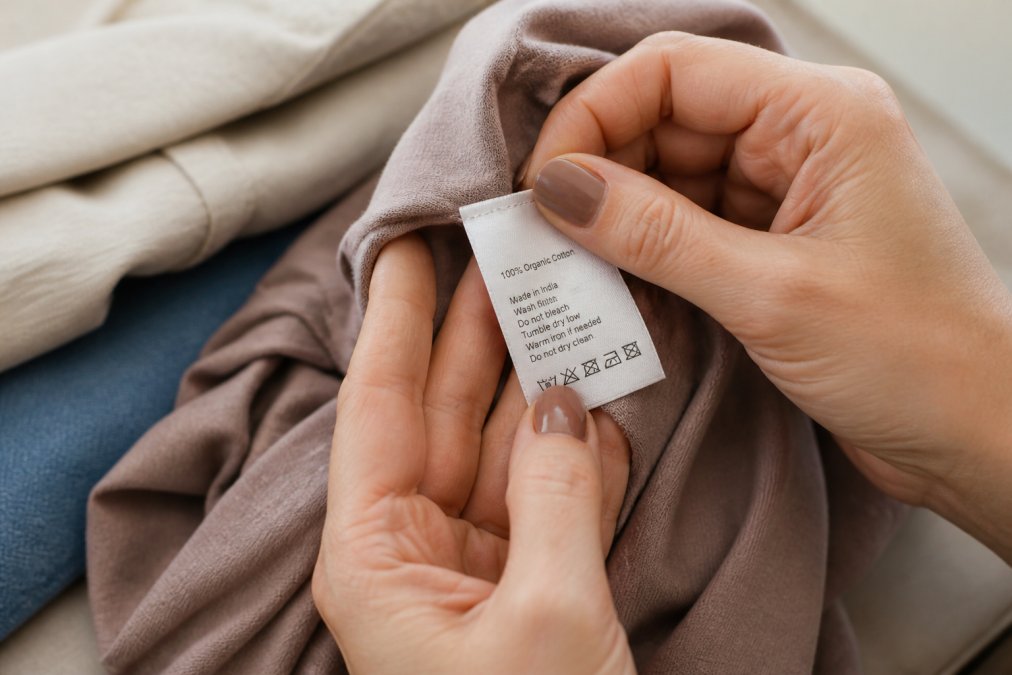
Reading Fiber Content and Finish Claims
Start with fiber content, because it shapes how a dye behaves. Natural fibers like organic cotton and bamboo blends hold colorants differently than synthetics, and some synthetics require more aggressive dyeing. Look for phrases like "low-impact dyes," "natural plant dyes," or "undyed."
Then check for certification logos. A recognized textile safety certification means the garment was screened against a restricted substances list, far more useful than a vague "eco-friendly" claim on the tag.
OEKO-TEX Certification Meaning and Other Safety Standards
OEKO-TEX certification meaning comes down to one thing: independent testing for harmful substances. The STANDARD 100 label screens finished textiles against a restricted substances list that includes azo dyes, formaldehyde, heavy metals, and other regulated compounds (oeko-tex.com).
Two other standards are worth knowing. GOTS covers the entire organic textile supply chain, from fiber to finished garment, including dye and processing requirements. Bluesign focuses on chemical inputs at the manufacturing stage. Any of these beats a brand's own marketing language.
| Certification | What It Covers | Best Signal For |
|---|---|---|
| OEKO-TEX STANDARD 100 | Finished textile, harmful substances | Skin-contact safety |
| GOTS | Full organic supply chain | Organic fiber plus processing |
| Bluesign | Chemical inputs in production | Manufacturing-level safety |
You can verify claims through OEKO-TEX's official certification database, which lets you look up a certificate number directly rather than trusting a logo.
How to Wash New Clothes to Remove Chemicals
Washing before first wear is the highest-return step you can take, and the one most shoppers skip. A single proper wash removes a meaningful share of loose surface dye, water-soluble finishing agents, and the volatile compounds behind that "new clothes" smell. It won't strip a chemically bound dye out of the fiber, nothing at home will, so the goal is reducing what sits on the surface, not sterilizing the garment.
Why Each Step Matters
- Turn the garment inside out. Dye and finish residues concentrate on the interior surface during finishing and packing, so inverting it puts that surface directly against the wash water.
- Wash in cold water on a gentle cycle. Hot water can set reactive dyes and shrink cellulose fibers, locking residues in. Cold water also reduces color bleeding onto other items.
- Use a fragrance-free, dye-free detergent. You're removing chemistry, not adding it. Perfumes and optical brighteners in conventional detergent compound irritation and mask the odors you're trying to eliminate.
- Add half a cup of white vinegar to the rinse cycle. The mild acidity lifts residual dye and acts as a fixative for many cellulose-fiber dyes. Don't pour it directly on the garment, add it to the rinse dispenser or dilute it in water first.
- Skip fabric softener and dryer sheets. Both coat fibers with a waxy film that traps residues against the skin and blocks future release.
- Line dry in fresh air when you can. Sunlight and airflow dissipate volatile compounds water alone won't remove. If you use a dryer, choose low heat, high heat bakes residues into the fiber.
- Wash twice for deep or saturated colors. Black, navy, true red, and deep indigo carry the heaviest dye loads, so a second wash is the biggest improvement you can make.
Fiber-Specific Adjustments
The protocol above is a default. Adjust it by fiber.
- Cotton, linen, bamboo, and other cellulose fibers: the standard cold-wash protocol works well, and these fibers benefit most from the vinegar rinse.
- Wool and silk: skip the vinegar rinse and use a pH-neutral wool wash. These protein fibers are sensitive to acidity and agitation, so hand-wash gently in cool water.
- Polyester, nylon, and other synthetics: cold wash matters less because disperse dyes are set under pressure and won't leach much. The bigger issue is residual carrier chemicals, which are volatile rather than water-soluble, so line-drying does more work than the wash, give synthetics a full 24 hours of airing before wearing.
- Blends: treat the garment according to its most delicate fiber. A cotton-poly blend should be washed like cotton but aired like polyester.
How Many Washes Is Enough?
There's no universal number, but a practical rule: one wash for light colors on natural fibers, two for deep colors or any garment that failed the soak test, and a third only if the off-gas smell persists. If it still smells chemical after three washes, return it.
What Washing Cannot Fix
Washing reduces surface residues. It does not remove azo dyes bonded to the fiber, heavy metals used in dyeing, or chemicals incorporated into the fiber itself. Washing is a mitigation step, not a solution, the real fix is choosing garments tested for restricted substances.
A Note on Vinegar and Baking Soda
Both are commonly recommended, and both have limits. Vinegar is a useful rinse aid for cellulose fibers and a mild dye fixative. Baking soda neutralizes acidic odors but is alkaline, so it can dull some dyes and isn't ideal for wool or silk. Use one or the other, never both in the same wash, they neutralize each other.
DIY Home Testing Methods for Suspicious Fabrics
Most guides stop at "read the label," which leaves you no way to check a garment whose tag is vague, missing, or in a language you can't verify. The tests below won't identify a specific chemical, only a lab can, but they reveal whether a garment is shedding surface dye or off-gassing finishing agents, the two most common triggers for contact irritation. Treat them as triage, not diagnosis.
Test 1: The Damp White Cloth Rub
Use a clean white cotton cloth or paper towel, dampen it with cool water, and rub firmly along an inside seam, the underarm area, and the waistband for about 10 seconds each, the friction zones where dye transfer concentrates.
- No visible transfer: the dye is reasonably bound. Still wash once before wearing.
- Faint tint: normal for deep shades like indigo, black, and true red. Wash twice, then re-test.
- Obvious color transfer: the garment is shedding loosely bound dye, the pattern most often linked to irritation along seams.
A useful baseline: test a white cotton t-shirt you already own and trust, so you know what "faint" actually looks like on your cloth.
Test 2: The Cold Soak
Submerge the garment in cool water for 30 minutes, then lift it out and check the water against a white background.
- Clear or barely tinted water: low surface residue.
- Noticeably colored water: dye is still leaching. Wash and re-soak.
- Water that smells chemical or acrid: residual finishing agents rather than dye, the strongest signal to wash aggressively or return the item.
Use a glass or ceramic bowl, not metal, so you aren't reading a reaction between the water and the container.
Test 3: The Off-Gas Check
Unwrap a new garment and smell it immediately, then again after 24 hours in a ventilated room. A faint "new fabric" smell is normal and fades. A sharp, solvent-like, or ammonia-like odor persisting past a day signals residual processing chemistry, usually formaldehyde-based finishes and carrier solvents. If it survives two washes, return it.
Test 4: The Wear Patch Test
Before committing to a full day, wear the garment against the inside of your upper arm for two to three hours. That area has thin skin and consistent contact, so it reacts faster than your torso. Watch for redness, itching, or warmth along the seam line; if nothing appears, try a half-day before a full day.
What These Tests Can and Cannot Tell You
| Test | Detects | Does Not Detect |
|---|---|---|
| Damp cloth rub | Loose surface dye | Bound azo compounds |
| Cold soak | Leaching dye, some finishes | Heavy metals |
| Off-gas check | Volatile finishing agents | Non-volatile residues |
| Patch test | Your personal skin response | The specific chemical |
Fiber-Specific Expectations
Results differ by fabric, which matters for interpretation. Cellulose fibers like cotton, linen, and bamboo absorb dye into the fiber structure, so they release more color in a soak but hold less on the surface. Protein fibers like wool and silk bond dye more tightly and shed less. Synthetics like polyester are dyed under pressure with disperse dyes, they often pass the rub test but are most likely to carry residual carrier chemicals, which show up in the off-gas check rather than the soak.
That's the point most guides miss: a polyester garment that passes the rub and soak tests can still be the riskier item in your closet if it smells like a new car interior.
Safer Fabric and Dye Choices for Sensitive Skin
Choosing safer fabrics comes down to two questions: what the fiber is, and how it was colored. Natural plant dyes and low-impact synthetic alternatives reduce the chemical load, while organic cotton and bamboo blends feel gentler against reactive skin.
If you have sensitive skin, prioritize garments with a recognized certification, favor lighter colors over deep saturated ones, and choose brands transparent about their dye process. Colorfastness matters too: a dye that stays put is less likely to transfer to your skin.
This is where Ecogoldencomfort's approach fits. Our women's pants are made from sustainable bamboo and organic cotton blends, chosen for natural softness and breathability. We focus on plant-based materials and eco-friendly packaging. For shoppers burned by "organic" labels before, checking certification and fiber together is the surest path to comfort.
Frequently Asked Questions
Is Rit fabric dye toxic?
Rit brand dyes are formulated for home use and the company states they are non-toxic when used as directed. However, some fabric dyes, especially older or industrial formulations, can contain azo compounds or heavy metals. Rit's current product line does not use these restricted substances, but anyone with sensitive skin should still wash dyed garments before wearing them to remove surface residue.
Can toxic chemicals be washed out of clothing?
Washing removes some surface-level chemicals, particularly formaldehyde finishes and loose dye particles, but it cannot eliminate all toxic substances. Azo dyes that are chemically bonded to the fabric will remain. Washing new clothes once or twice in hot water with a gentle detergent reduces chemical leaching significantly, especially for formaldehyde-based finishes and residual dye on the surface.
What is the most unhealthy fabric to wear?
There is no single worst fabric, but synthetic fibers dyed with azo compounds and finished with formaldehyde pose the highest concern. Polyester and acrylic garments often use disperse dyes that can cause skin irritation, and synthetic fabrics trap chemicals against the skin. Natural fibers like organic cotton or bamboo, especially when dyed with low-impact or plant-based dyes, are generally safer for sensitive skin.
How do I know if my clothes contain azo dyes?
Azo dyes are rarely listed on labels. Look for certifications like OEKO-TEX Standard 100, which tests for banned azo compounds, or GOTS for organic textiles. If a garment has no certification and the color is very bright or dark, especially reds, oranges, and blacks, there is a higher chance azo dyes were used. Washing new clothes before wearing reduces surface azo dye residue.
Sorting safe clothing from the rest takes a little label literacy, but the payoff is real: fewer reactions, less guesswork, and garments you actually enjoy wearing. Ecogoldencomfort builds women's pants from sustainable bamboo and organic cotton blends, with natural softness, breathability, and durability designed for everyday comfort. If sensitive skin and responsible materials are your priorities, explore the collection and feel the difference plant-based fabric makes.