
How to Find Pant Inseam for a Comfortable Fit

A pair of pants can feel wonderfully soft at the waist and still spend more time brushing the floor than moving with you. Knowing how to find pant inseam gives you a simple way to choose bottoms that feel considered from waist to hem - whether you are relaxing at home, heading to lunch, or taking an afternoon walk.
The inseam is only one part of fit, but it has an outsized effect on comfort and confidence. The right length helps a pant drape as intended, keeps hems cleaner, and lets you move without constantly tugging at the fabric. Best of all, you do not need a fitting room or special tools to find yours.
What Is a Pant Inseam?
A pant inseam is the measurement from the crotch seam, where the inside leg seams meet, down to the bottom edge of the pant leg. It is usually shown in inches and describes the length of the inside leg - not your full leg from the waist.
For example, a pair labeled 12 x 29 may indicate a 12-inch waist size and a 29-inch inseam. Brands do not always use the same labeling system, so a product’s size chart remains the most dependable reference. Still, once you know your preferred inseam range, shopping for pants online becomes much easier.
Inseam affects where the hem lands, but it does not work alone. Rise, waist placement, fabric stretch, leg shape, and the shoes you wear all influence the finished look. A high-rise pant may need a different inseam than a low-rise style, even when both are made for the same person.
How to Find Pant Inseam With Pants You Already Love
The easiest and often most accurate method is to measure a pair you already wear often. Choose pants that fit well through the rise and land at a length you enjoy. Wash them first if they are made from natural fibers and have not been washed recently, since some fabrics can settle slightly after laundering.
Lay the pants flat on a table, bed, or clean floor. Smooth the legs gently, without pulling the fabric taut. Find the point at the crotch where the two inner leg seams join. Place the end of a flexible measuring tape there and run it along the inner seam to the hem. That number is the inseam.
Measure twice, especially if the pant leg has a slight twist from wear or washing. If the two legs differ by a small amount, use the average. Write down the measurement, along with a few helpful notes: whether the pants are full length or ankle length, the type of shoe you typically wear, and whether you like the hem to skim the top of your foot or stop above it.
This method is particularly useful for comfortable pull-on pants, relaxed trousers, and soft knit styles. When a familiar pair already supports your everyday movement, it offers more useful information than a number taken in isolation.
Measure More Than One Favorite Pair
One well-fitting pair is a fine starting point, but two or three pairs can reveal a better pattern. You may find that you prefer a 28-inch inseam in a slim ankle pant, while a relaxed straight leg feels best at 29 inches. A flare may need a little more length to create its intended line.
That is not inconsistency. Different silhouettes are designed to fall differently. Think of your ideal inseam as a small range, rather than one fixed number for every pair of pants.
Measure Your Body for a Starting Point
If you do not have a pair of pants to use as a reference, you can measure your body. Put on close-fitting leggings, shorts, or comfortable underwear so the measuring tape can follow the inside of your leg without catching on loose fabric. Stand naturally in bare feet, with your weight balanced on both legs.
Place the top of the tape at the highest point of your inner thigh, where your legs meet. Bring the tape down the inside of your leg to the point where you would like the hem to end. It can help to ask someone you trust to take this measurement, since bending to reach the tape may change your posture and shorten the result.
If you are measuring alone, use a mirror and take your time. You can also mark the desired hem point with a small piece of painter’s tape while wearing leggings, then measure from the inner thigh down to that mark. This approach gives you a useful estimate, though measuring a favorite pair is usually more precise for shopping.
Choose the Hem Length for Your Shoes and Style
A pant inseam is not simply about height. It is about where you want the fabric to meet your footwear and how you want the silhouette to feel.
For a full-length straight leg or relaxed sport pant worn with flat shoes, the hem often looks balanced when it reaches near the top of the foot without dragging beneath the heel. This creates an easy line while helping preserve the hem during everyday errands and walks.
An ankle-length pant should finish above the ankle bone or just around it, depending on the cut. The exposed ankle can make a softer, roomier pant feel lighter and more polished. Cropped styles vary even more, so rely on the product description and inseam measurement rather than the word cropped alone.
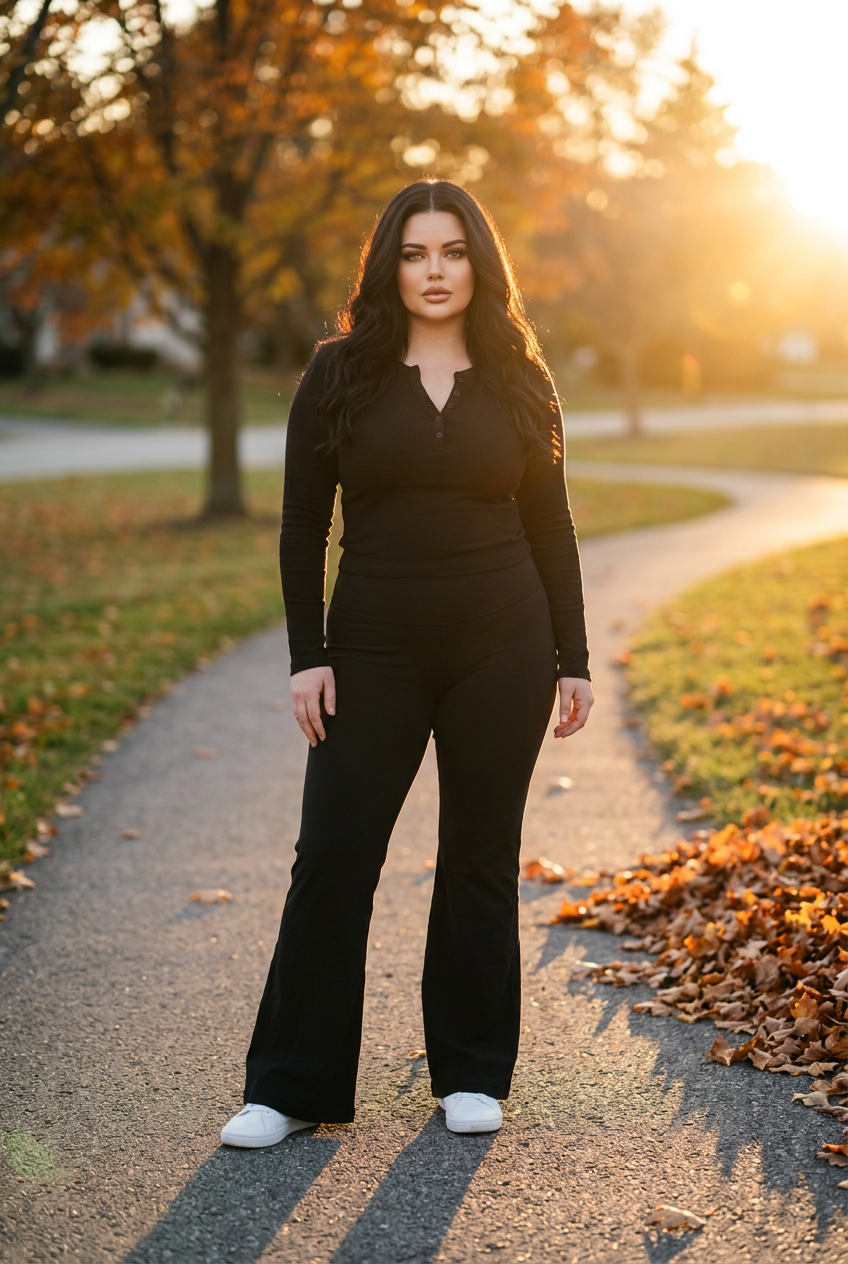
Flare pants need special attention. A flare is designed to fall over part of the shoe, so an inseam that feels too long in a straight-leg pant may be exactly right in a fuller hem. Try to measure with the shoes you expect to wear most often. If you alternate between supportive sneakers and low heels, choose the length that works for the shoes you reach for on an ordinary day.
Why Rise Can Change the Way an Inseam Feels
The same inseam can look different depending on the rise. High-rise pants sit closer to the natural waist and may place the crotch seam slightly higher, allowing the leg to appear longer. Mid-rise pants sit lower and can make the same stated inseam feel shorter on the body.
This is one reason it helps to consider the whole garment instead of chasing a single measurement. If a pant has a rise you know is comfortable for you, its inseam recommendation is more likely to be useful. The goal is not to match a number perfectly. It is to find a proportion that lets you sit, stretch, walk, and rest without distraction.
Fabric also matters. A soft bamboo blend or cotton knit may relax gently with wear, while a crisp woven pant may hold its original line more firmly. Neither is better in every situation. It simply means the drape and intended use should guide your choice.
Compare Your Measurement With the Size Chart
Once you have an inseam measurement, compare it to the garment’s size chart before ordering. Look for a separate inseam listing when possible, rather than assuming every size has the same leg length. Some brands grade inseam slightly as sizes increase, while others keep it consistent.
If your preferred inseam falls between two lengths, consider the silhouette and fabric. A relaxed pant with a cuffable hem may be forgiving when it is a little longer. A tapered ankle pant can look intentionally cropped when it is a little shorter. A wide-leg or flare that is too short, however, may lose the graceful shape that makes the style feel balanced.
When the chart does not provide an inseam, customer service can often clarify the measurement. A thoughtful question before you order can prevent the frustration of receiving pants that are otherwise lovely but not quite right for your stride.
Small Fit Details That Make a Big Difference
Inseam is a practical number, but comfort lives in the details. Before deciding on a length, consider whether the pant has an elastic waist, a drawstring, side pockets, stretch, or a hem that can be altered. These features can affect how and where the pant settles on your body during the day.
Also notice your daily routine. If you spend time gardening, walking a dog, traveling, or moving between indoors and outdoors, a hem that clears the ground may serve you better than one that is dramatically long. If you mainly want a polished pant for dinners, gatherings, or relaxed occasions, a fuller break over the shoe may be exactly what feels most like you.
At Eco Golden Comfort, we believe clothing should honor the life you actually live. A good inseam does not ask you to change your stride or tolerate a hem that gets in the way. It supports ease, movement, and the quiet confidence that comes from feeling at home in your clothes.
The most helpful measurement is the one that reflects your real habits, your favorite shoes, and the way you want to feel. Keep your preferred inseam written somewhere handy, then let it make your next pair of pants a little simpler to choose - and a lot more satisfying to wear.