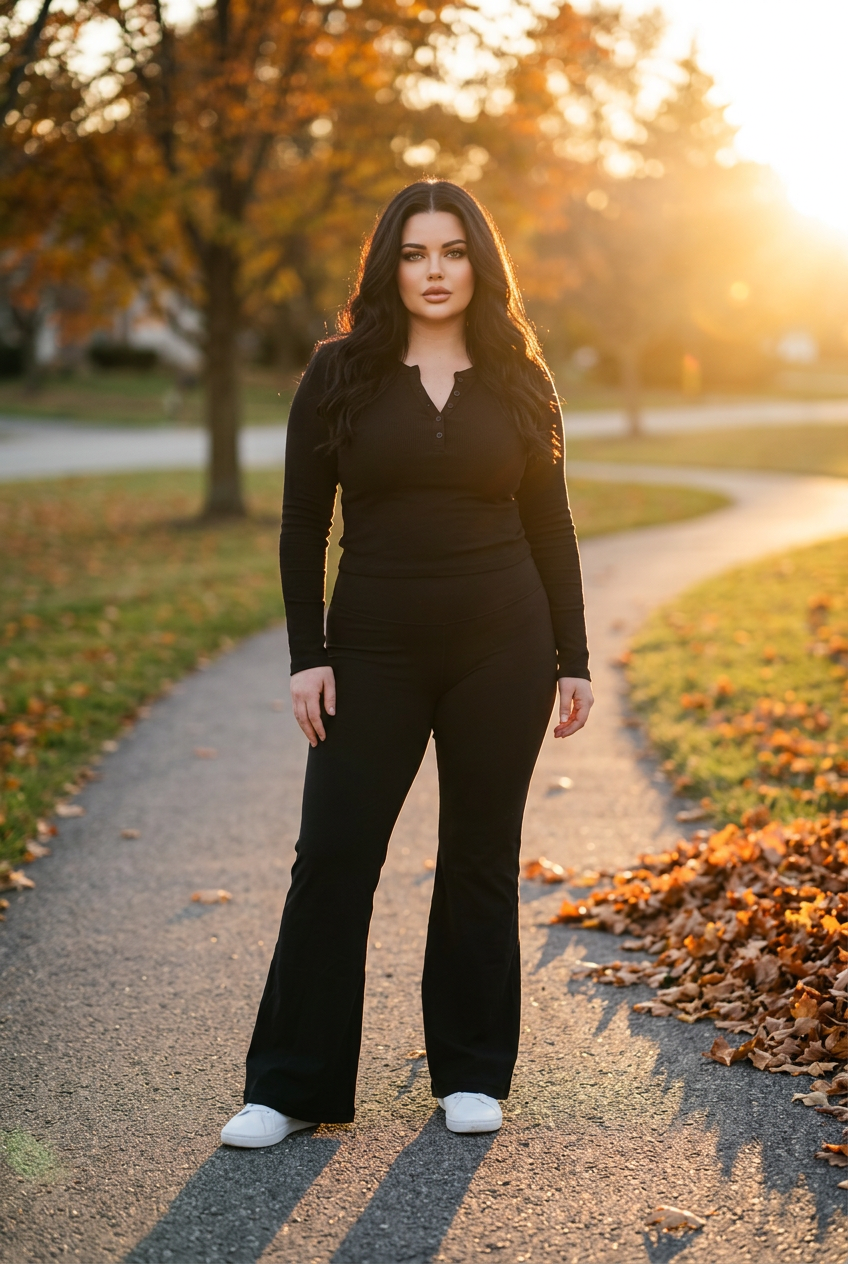

How Should Flare Pants Fit? A Gentle Guide

A great pair of flare pants should let you move through a full day without asking for your attention. You should be able to sit for coffee, take a neighborhood walk, reach for a high shelf, and relax at home without tugging at the waistband or feeling caught in the knees. So, how should flare pants fit? They should feel gently secure at the waist and hips, smooth through the leg, and release into a balanced flare that moves easily with you.
The right fit is not about chasing a number on a tag or forcing your body into a particular silhouette. It is about finding a shape that feels polished, comfortable, and true to the way you live. For many women, flare pants offer a welcome middle ground: more fluid than leggings, less structured than traditional trousers, and flattering without feeling fussy.
How Should Flare Pants Fit at the Waist and Hips?
Start with the waistband, because comfort begins there. A well-fitting pair should rest securely at your natural waist or wherever the design is intended to sit, without rolling, pinching, or leaving a deep mark at the end of the day. You should not need to pull the waistband up repeatedly, but it should also never feel like it is pressing into your stomach when you sit.
A comfortable waistband has a little give. Plant-based fabrics with thoughtful stretch are especially helpful here, since they can move with normal changes in the body throughout the day. A meal out, a long car ride, or simply a warm afternoon should not make your pants suddenly feel too tight.
Across the hips and seat, flare pants should follow your shape rather than squeeze it. The fabric can skim the body, but it should lie smoothly. Horizontal pulling lines across the hips or seat usually mean the pants are too small or the rise is not working for your proportions. Extra fabric that pools at the back of the thighs or seat may mean you need a different size or silhouette.
There is no need for the hips to look perfectly still or rigid. Bodies move, and a bit of natural ease is far more flattering than fabric stretched tightly across the body. When the fit is right, you will see a clean line without feeling restricted.
The Rise Should Support, Not Constrict
The rise is the distance from the waistband in front, through the legs, and up to the waistband in back. It quietly shapes how flare pants feel when you walk, sit, and bend. If the rise is too short, you may feel the pants pull downward when seated or find yourself adjusting them throughout the day. If it is too long for your frame, fabric may bunch in the crotch area.
Many women appreciate a mid-rise or higher-rise flare pant because it offers gentle coverage and a sense of security through the middle. The best choice depends on your torso length, where you naturally like your waistband to sit, and what feels most comfortable to you. A higher waist can create a long, balanced line, while a mid-rise can feel more relaxed and familiar.
Try a simple movement check when you first put on a pair. Sit in a chair, bend slightly to pick something up, and take several natural steps. The rise should stay in place without pulling, digging, or creating uncomfortable pressure. Comfort should remain consistent whether you are standing tall or settling into your favorite chair.
Look for a Smooth Line Through the Thigh and Knee
Classic flare pants are generally fitted from the hip through the thigh, then begin to widen at or just below the knee. This gentle shaping is what gives the style its graceful, lengthening effect. The upper leg should feel close enough to create definition, but never tight enough to limit a stride or reveal strain in the fabric.
If you see pronounced horizontal lines across the thighs, or if the fabric feels taut when you sit, try the next size up. On the other hand, if the material gathers heavily around the knees or sags through the thighs, a smaller size may offer a cleaner fit. Fabric matters here. A soft, breathable knit with flexible stretch may sit closer to the body comfortably, while a firmer woven fabric may need a little more room.
The transition at the knee should feel natural. A flare that begins too high can look more dramatic and may feel less versatile for everyday wear. A flare beginning around the knee or slightly below tends to create an easy, balanced shape that works beautifully with casual sneakers, supportive walking shoes, flats, or a low boot.
The Hem Is Where Proportion Comes Together
Flare pants should nearly graze the top of your shoe, not sweep the floor. A hem that drags can catch dirt, wear out quickly, and become a tripping concern. A hem that stops too far above the ankle can interrupt the long line that makes flares so appealing, though cropped flare styles are intentionally designed to do just that.
For full-length flare pants, try them on with the shoes you expect to wear most often. If you live in supportive sneakers or low-profile slip-ons, use those when checking the length. The hem should hover close to the ground at the back while still clearing it as you walk. If you prefer a small heel or wedge, you may want a slightly longer inseam.
Your height is only one piece of the equation. Leg length, rise, and the placement of the flare all affect how the pants look. Petite women often benefit from a hem that is clean and close to the shoe, which helps preserve visual length. Taller women may prefer a longer inseam, but the same rule applies: the fabric should flow, not drag.
Four Signs Your Flare Pants Fit Well
A mirror can help, but how the pants feel after an hour tells you even more. A good-fitting pair will usually show these signs:
- The waistband stays comfortably in place when you sit, walk, and bend.
- The fabric lies smooth across the hips, seat, and thighs without pulling or sagging.
- You have enough room to take a full stride and move naturally through daily tasks.
- The flare falls evenly from the knee and the hem clears the floor in your usual shoes.
Choose the Size That Serves Your Day
When your measurements fall between sizes, the better choice depends on where you prefer ease. If you want a smooth, closer fit through the thigh and the fabric has comfortable stretch, the smaller size may work. If you value a relaxed waist, fuller hip room, or easy layering on cooler days, sizing up may be the wiser choice.
Do not judge flare pants by the size you typically wear in denim or tailored trousers. Different fabrics, waistbands, and rises can make the same labeled size feel very different. A measurement chart is a useful starting point, especially when shopping online, but your comfort preferences matter just as much.
At Eco Golden Comfort, the Clare Flare is designed with this everyday reality in mind: softness, flexible movement, and a flattering shape should work together. The goal is not to make you feel dressed up at the expense of ease. It is to help you feel like yourself, only more comfortable and put together.
Styling Can Change How the Fit Feels
A flare pant that fits properly is naturally versatile. A longer top can provide gentle coverage through the hips, while a shorter knit or tucked-in tee can highlight the waist and lengthen the leg. Neither approach is more correct. Choose the balance that makes you feel most at ease.
If you are new to flares, begin with simple pieces you already enjoy wearing: a soft cotton top, a lightweight cardigan, or a relaxed button-front shirt. Let the pants bring the shape. Because the flare adds movement below the knee, an uncomplicated top often creates a calm, polished outfit without much effort.
The most flattering fit is the one that supports your body instead of asking your body to change. When your flare pants stay comfortable from morning plans to a quiet evening at home, you have found more than a good silhouette. You have found a piece that makes room for living well.