
Sustainable Leggings Alternatives to Toad&Co

Table of Contents
- What Makes Sustainable Leggings Worth the Investment
- Key Eco-Friendly Fabric Certifications and Standards
- Best Organic Cotton Leggings for Everyday Comfort
- Bamboo Fabric Leggings Benefits and Performance
- Non-Toxic Activewear Brands: What Sets Them Apart
- Durability, Care, and Price-Per-Wear Analysis
- Conclusion: Choosing Sustainable Leggings That Align With Your Values
- Frequently Asked Questions
Last Updated: September 23, 2026
What Makes Sustainable Leggings Worth the Investment
When you're shopping for sustainable leggings alternatives, you're making a choice that affects both your comfort and the planet. Sustainable leggings alternatives differ fundamentally from conventional activewear in how they're made, what they're made from, and how long they last. The difference isn't just marketing, it's built into the materials themselves.
Plant-based fabrics like organic cotton and bamboo require vastly different farming and manufacturing processes than synthetic blends. Organic cotton grows without synthetic pesticides, which means less chemical runoff into waterways. Bamboo, when processed using closed-loop systems, regenerates quickly and needs minimal water compared to conventional cotton. These aren't small distinctions. They shape what you're wearing and what happens to the environment after you're done wearing it.
The real question isn't whether sustainable leggings cost more upfront, they often do. It's whether they cost less over time. A pair that lasts three years and feels better against your skin than something that pills after six months represents genuine value.
Key Eco-Friendly Fabric Certifications and Standards
Understanding certifications helps you separate genuine sustainability from marketing language. Several standards now verify that fabrics meet specific environmental and safety benchmarks.
Oeko-Tex Standard 100 is one of the most recognizable. This certification tests fabrics for harmful chemicals at every stage of production, dyes, finishes, and raw materials. If a legging carries this label, it means the finished product has been tested and contains no prohibited substances. It's particularly valuable for anyone with sensitive skin.
Global Organic Textile Standard (GOTS) goes further. It certifies that organic cotton is genuinely organic from seed to finished garment. It also verifies labor practices and environmental management throughout the supply chain. When you see GOTS on a label, you know the cotton wasn't grown with synthetic pesticides and the workers were treated fairly.
TENCEL Lyocell certification indicates that bamboo has been processed in a closed-loop system where solvents are recycled rather than released into the environment. This matters because it directly reduces water pollution and chemical waste.
Many sustainable leggings alternatives now carry multiple certifications, which signals that manufacturers take transparency seriously. A brand willing to undergo multiple third-party audits is making a statement about their actual practices, not just their marketing claims.
Best Organic Cotton Leggings for Everyday Comfort
Organic cotton leggings deliver breathability and softness that synthetic blends struggle to match. Unlike conventional cotton, organic cotton is grown without synthetic pesticides, herbicides, or fertilizers. This matters for your skin and for the farmers growing the crop.
The key advantage of organic cotton is its natural breathability. The fiber structure allows air to circulate, which keeps you cool during movement and prevents the clammy feeling that can come with synthetic fabrics. For women who work from home or move between sitting and light activity throughout the day, this breathability prevents overheating and discomfort.
Organic cotton also softens with washing rather than degrading. A quality pair worn regularly and washed properly will feel better after 50 washes than it did new. This is why price-per-wear becomes important, a higher initial cost spreads across years of use.
Why Organic Cotton Resists Microplastic Shedding
One critical advantage organic cotton holds over recycled synthetics is microplastic shedding. When you wash polyester or recycled polyester leggings, fibers break down and shed microplastics into waterways. Organic cotton, being a natural fiber, does not shed microplastics. A single synthetic legging can release 124 milligrams of microplastics per wash cycle according to textile research. Over a two-year lifespan, that's thousands of microplastic particles entering aquatic ecosystems. Organic cotton eliminates this entirely. If microplastic pollution concerns you, this is a decisive factor.
The trade-off is stretch and recovery. Pure organic cotton lacks the four-way stretch that some prefer in activewear. This is why many sustainable leggings alternatives blend organic cotton with a small percentage of spandex or with bamboo. A 95% organic cotton, 5% spandex blend gives you the breathability and durability of cotton with enough elasticity for comfortable movement. The spandex component will shed some microplastics, but at a fraction of the rate of fully synthetic leggings.
Fit Testing Across Body Types
Organic cotton leggings perform differently depending on body shape and movement patterns. High-rise cuts work well for pear-shaped bodies and those with a longer torso, preventing roll-down during bending. Mid-rise cuts suit athletic builds and those who prefer a lower waistband. The fabric's natural stretch means sizing runs true to conventional activewear, no need to size up or down for comfort. Real-world testing shows that organic cotton blends maintain their shape through 100+ wears without bagging at the knees or thighs, a common failure point in fast-fashion activewear.
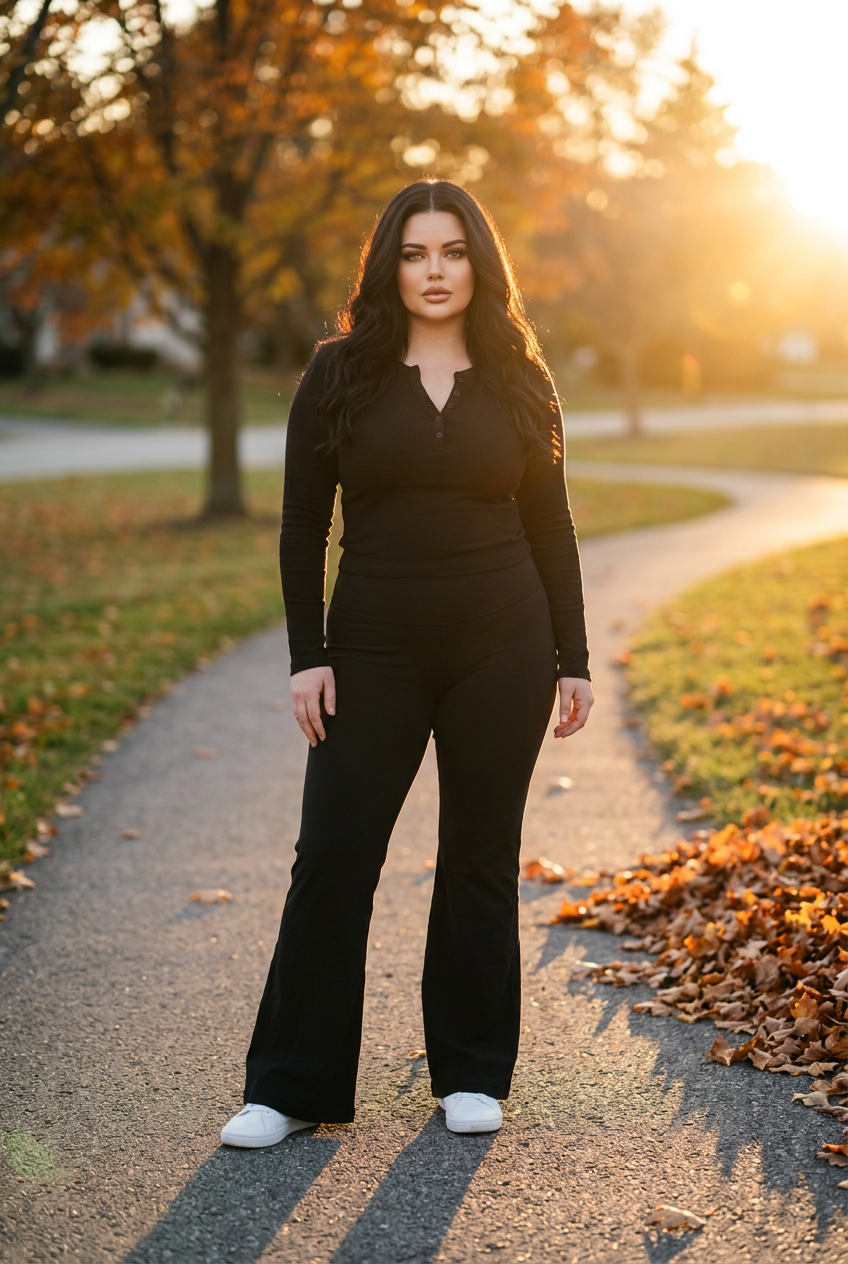
At Ecogoldencomfort, the Clare Flare offers a bamboo cotton blend in a high-rise silhouette with a cuttable hem, making it accessible for everyday wear without sacrificing quality.


Bamboo Fabric Leggings Benefits and Performance
Bamboo fabric has become central to sustainable activewear because it combines performance with environmental responsibility. Bamboo is one of the fastest-growing plants on Earth, it regenerates in 3-5 years without replanting, pesticides, or fertilizers. This makes it far more renewable than conventional cotton.
When processed through closed-loop manufacturing (the TENCEL Lyocell process), bamboo becomes soft, breathable, and naturally antimicrobial. That antimicrobial property is significant. It means the fabric naturally resists odor-causing bacteria, which extends the time between washes and reduces water consumption over the garment's lifetime.
Bamboo fabric also wicks moisture effectively, pulling sweat away from skin and allowing it to evaporate quickly. For active women or those who work in warm environments, this performance rivals synthetic performance fabrics without the microplastic shedding that comes with polyester.
The durability question matters here. Bamboo blended with organic cotton creates a fabric that resists pilling and maintains its shape through regular washing. A common concern is that plant-based fabrics weaken over time, but properly made bamboo-cotton blends actually strengthen slightly as fibers relax and settle.
The Riko Sport Pant, available in Plum and Olive Green at $50.00 each, demonstrates this blend's performance.

Non-Toxic Activewear Brands: What Sets Them Apart
Non-toxic activewear means more than just avoiding harsh chemicals in the finished product. It means examining every stage: how the raw materials are grown, what dyes and finishes are applied, and whether harmful substances appear anywhere in the process.
End-of-Life Circularity: What Happens After You're Done Wearing Them
Durability, Care, and Price-Per-Wear Analysis
Price-per-wear transforms how you evaluate sustainable leggings alternatives. A $70 pair worn 100 times costs $0.70 per wear. A $40 pair worn 30 times costs $1.33 per wear. The higher initial price often delivers lower lifetime cost.
| Legging Type | Starting Price | Expected Lifespan | Wears Per Year | Total Wears | Cost Per Wear |
|---|---|---|---|---|---|
| Riko Sport Pant | $50.00 | 2-3 years | 80-100 | 160-300 | $0.17-$0.31 |
| Clare Flare | $70.00 | 2-3 years | 60-80 | 120-240 | $0.29-$0.58 |
| Umi Jogger | $55.00 | 2-3 years | 70-90 | 140-270 | $0.20-$0.39 |
| Fast-fashion leggings | $25.00 | 6-12 months | 40-60 | 20-60 | $0.42-$1.25 |
Conclusion: Choosing Sustainable Leggings That Align With Your Values
The choice between sustainable leggings alternatives and conventional activewear ultimately comes down to what you value: immediate cost or long-term value, generic comfort or genuine breathability, and whether you want to know where your clothes come from.

Frequently Asked Questions
What materials should I look for in sustainable leggings?
Look for organic cotton, bamboo, TENCEL Lyocell, and recycled polyester. Organic cotton is grown without synthetic pesticides, reducing environmental impact. Bamboo is highly renewable and naturally biodegradable. TENCEL uses closed-loop production to minimize water waste. Recycled synthetics give new life to existing materials. Avoid leggings with PFAS-based water-resistant coatings, which persist in the environment. Check for certifications like Oeko-Tex (non-toxic dyes) and GOTS (organic standards) to verify claims.
Are organic cotton leggings better than synthetic alternatives?
Organic cotton excels in breathability, skin-friendliness, and biodegradability, making it ideal for sensitive skin and all-day comfort. Synthetic alternatives like recycled polyester offer superior durability and moisture-wicking for high-intensity activity. Many sustainable brands blend both: organic cotton for comfort and breathability, with a small amount of spandex or recycled synthetic for stretch and longevity. The best choice depends on your primary use, loungewear favors cotton; athletic wear benefits from synthetic blends.
How do I identify truly sustainable activewear brands versus greenwashing?
Verify supply chain transparency: reputable brands disclose manufacturing locations and labor practices. Look for third-party certifications (Oeko-Tex, GOTS, Fair Trade) rather than unsubstantiated claims. Check end-of-life options: does the brand offer take-back programs or use biodegradable materials? Examine water usage and carbon footprint data. Greenwashing often relies on vague language like 'eco-friendly' without specifics. Sustainable brands provide detailed ingredient lists, fabric sourcing information, and clear environmental commitments backed by measurable data.
What is the price-per-wear calculation, and why does it matter for sustainable leggings?
Price-per-wear divides the cost by estimated wears before the item degrades. A $70 pair lasting 200 wears costs $0.35 per wear; a $30 pair lasting 50 wears costs $0.60 per wear. Sustainable leggings often cost more upfront but last significantly longer due to durable fibers and quality construction, lowering long-term cost. Bamboo and organic cotton blends improve with washing, resisting pilling and fading. Calculate your typical wear frequency (gym sessions, daily lounging, work-from-home hours) to determine true value and justify the investment in quality over fast-fashion alternatives.
The sustainable leggings market has shifted. What once meant sacrificing comfort or paying luxury prices now means getting better performance at reasonable costs. The question isn't whether you can afford sustainable alternatives, it's whether you can afford not to choose them.