
How to Prevent Clothing Pilling: 7 Laundry Fixes

Table of Contents
- Why Do Clothes Pill? The Real Cause of Fabric Fuzz
- Prevention Starts With Sorting and Care Labels
- Wash Smart: Cold Water, Gentle Cycles, and Mesh Bags
- How to Wash Bamboo Fabric to Keep It Pill-Free
- Drying Methods That Reduce Friction and Fiber Breakage
- How to Remove Pilling From Clothes Already Damaged
- Pill-Resistant Fabrics and What to Buy Next
- Final Word on Keeping Your Wardrobe Smooth
- Frequently Asked Questions
Last Updated: September 5, 2026
Why Do Clothes Pill? The Real Cause of Fabric Fuzz
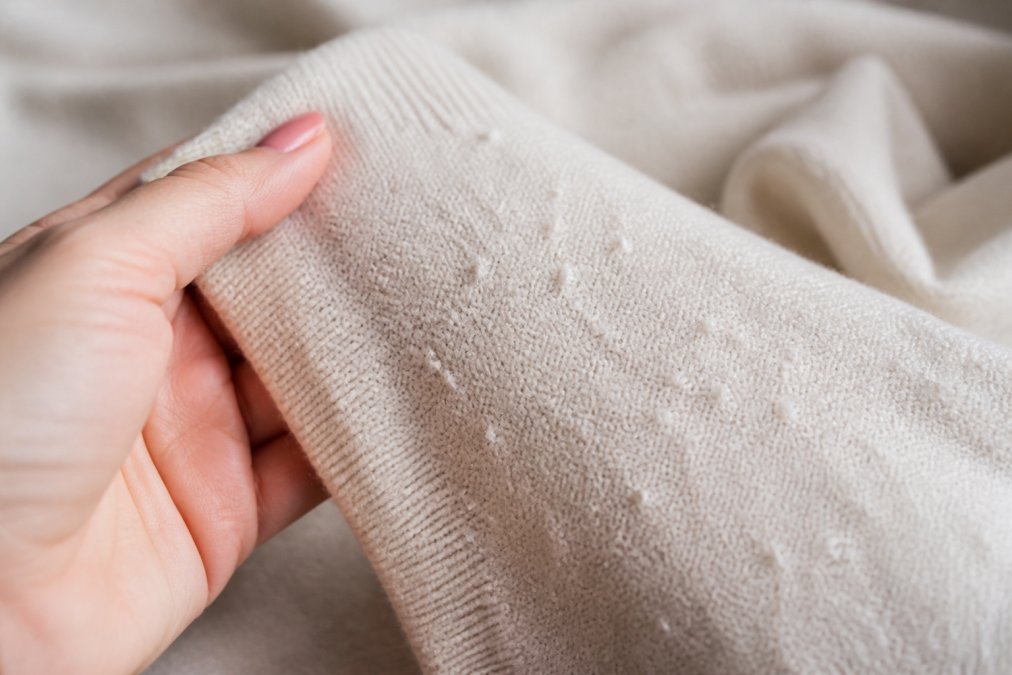
Clothing pilling is the formation of small, fuzzy balls on fabric surfaces caused by friction and fiber breakage. When loose fibers tangle together during wear and washing, they form those unsightly knots. At Ecogoldencomfort, we have spent decades in textile manufacturing, and the root cause is almost always mechanical stress on weaker or shorter fibers.
As fabric rubs against itself, other clothing, or surfaces, surface fuzz develops and entangles into pills. Synthetic fibers are more prone because their smooth, durable filaments hold onto fuzz rather than shedding it. Natural fibers like cotton and bamboo shed loose fibers more gracefully, which is why a tightly woven, high-quality plant-based fabric resists pilling far better than a loose knit acrylic sweater.
Prevention Starts With Sorting and Care Labels
Preventing pilling begins before the wash cycle with sorting laundry by fabric type and reading every care label. Labels tell you fiber content, recommended water temperature, and agitation level. Ignoring them is the fastest way to invite fiber breakage and surface fuzz.
Washing heavy denim or towels with delicate knits damages lighter fabrics. Sort laundry into at least three groups: sturdy items like jeans and towels, everyday cottons and bamboo blends, and delicates such as lingerie and fine knits. This reduces mechanical stress and extends textile durability.
Wash Smart: Cold Water, Gentle Cycles, and Mesh Bags
The laundry cycle is where most pilling damage occurs, but the fix isn't just about choosing the 'gentle' button. It's about understanding the mechanical forces and how different fiber chemistries respond to them.
The Mechanics of Fiber Stress
During a wash cycle, clothes face three primary forces: flex fatigue, surface abrasion, and hydrodynamic stress. Flex fatigue occurs when fabric is repeatedly bent, causing short staple fibers, under two inches, common in cotton and acrylic, to work to the surface. Surface abrasion pulls those loose fibers into tangled clusters we call pills. Hydrodynamic stress, the force of water pushing against fabric, can be significant in high-spin cycles.
Chemical vs. Mechanical Prevention
Most guides focus on reducing agitation, but the chemical side matters just as much. The pH level of your detergent and mineral content of your water directly affect fiber integrity. Standard detergents are alkaline (pH 9-10) to lift oils; this alkalinity can cause wool scales to swell and interlock, accelerating felting and pilling. Synthetics like polyester don't swell, but they attract oils that make fibers sticky, increasing friction.
Water Hardness: The Hidden Variable
Hard water, affecting more than 85% of the U.S. per the U.S. Geological Survey, contains calcium and magnesium ions that bind with detergent, reducing efficacy (usgs.gov). You might compensate with more detergent, leaving a residue that makes fibers brittle. If you live in a hard-water area, add a quarter cup of washing soda (sodium carbonate) to the drum before clothes to sequester minerals and prevent stiffening residue.
Fiber-Specific Wash Protocols
A single 'delicate' cycle is not universal. Different fiber types require different environments:
-
Synthetics (Polyester, Nylon, Spandex): These repel water but attract skin oils. Wash in warm water (not hot) with a sports detergent containing enzymes. Avoid fabric softener entirely; its waxy coating traps oils and grabs loose fibers. Use a fine-weave mesh bag (under 1mm) to prevent snagging.
-
Natural Cellulosics (Cotton, Bamboo Viscose, Linen): These absorb water and swell when wet, making them weaker, bamboo viscose's wet strength can drop by up to 50%. Use a cold wash (below 70°F) to minimize swelling and a liquid detergent; powders often contain abrasive sodium sulfate. Skip the high-spin cycle; opt for 600-800 RPM to reduce hydrodynamic stress.
-
Protein Fibers (Wool, Cashmere, Silk): These are the most chemically sensitive. Wool scales open in alkaline conditions and warm water, causing felting. Use a dedicated wool wash that is pH-neutral or slightly acidic (pH 5-6). Never use biological detergents with protease enzymes, which digest the protein structure.
The Mesh Bag Hierarchy
Not all mesh bags are equal. A coarse bag (5mm openings) still allows fabric surfaces to rub together inside. For high-risk items, use a fine-mesh bag (1mm or less) to prevent direct fabric-to-fabric contact while allowing water and detergent to circulate. Textile conservators often double-bag: place the garment in a fine-mesh bag, then inside a standard pillowcase.
By understanding water chemistry, fiber type, and mechanical action, you can tailor your wash routine to each garment's vulnerabilities, rather than relying on a one-size-fits-all 'delicate' setting.
How to Wash Bamboo Fabric to Keep It Pill-Free
Bamboo viscose has a soft, silky hand feel, but its fibers can be delicate when wet. Always turn bamboo garments inside out before washing to protect the outer surface from abrasion.
Use cold water and a mild liquid detergent free of harsh enzymes and optical brighteners, which can strip luster and weaken fibers. Skip fabric softener, which builds up and diminishes breathability. When the cycle finishes, shake the garment out gently and reshape it while damp.
Drying Methods That Reduce Friction and Fiber Breakage
Tumble drying creates intense friction and heat that weakens fibers. Air drying is the single most effective change you can make. Lay garments flat on a clean towel or drying rack, reshaping them to their original dimensions, eliminating the mechanical stress of tumbling entirely.
If you must use a machine dryer, opt for the lowest heat setting and remove items while slightly damp. Over-drying makes fibers brittle. For pilling-prone items, add them to the dryer only briefly to soften, then finish air drying.
How to Remove Pilling From Clothes Already Damaged
If pills have already formed, a fabric shaver is the most effective solution. It trims surface fuzz without cutting the fabric beneath. Use gentle, circular motions over a flat surface, and empty the collection chamber frequently.
A sweater stone or pilling comb can lift pills from knits. Work in one direction with light pressure to avoid snagging. Test any method on an inconspicuous area first. Regular removal, combined with preventive washing habits, keeps garments looking polished.
Pill-Resistant Fabrics and What to Buy Next
When shopping, the fabric's construction is your first and most powerful defense against pilling. The common advice, 'buy tightly woven, long-staple fabrics', only scratches the surface. You need to understand three structural factors: fiber length, yarn twist, and weave density.
Fiber Length: Staple vs. Filament
The single biggest predictor of pilling is whether a fabric is made from staple fibers (short, cut lengths) or filament fibers (continuous strands). Cotton, wool, and linen are naturally staple, ranging from 1 to 3 inches. Polyester, nylon, and bamboo lyocell can be continuous filaments. Staple fiber ends are exposed on the surface and work loose under friction; filament fabrics have no exposed ends, so there is nothing to work loose.
However, when a filament fabric does pill, the pills are more tenacious. A staple fiber pill will eventually break off and fall away; a filament pill, anchored by a continuous strand, stays attached and is nearly impossible to remove without cutting. This is why a cheap polyester sweater can look worse after a year than a quality cotton one.
Yarn Twist: The Hidden Variable
Yarn twist is measured in twists per inch (TPI). A high-twist yarn (15-20 TPI) holds fibers tightly, leaving fewer loose ends exposed. A low-twist yarn (5-8 TPI), common in soft sweaters, allows fibers to migrate easily. Labels like 'high-twist' or 'crepe' signal engineered pilling resistance. The trade-off is hand feel: high-twist yarns are crisper and less soft.
Weave Density: Thread Count and Cover Factor
Weave density determines how much surface area is exposed to friction. A tightly woven fabric with a high thread count (300+ for cotton) holds fibers firmly in place. A loose weave, like jersey or boucle, has gaps that allow fibers to tangle. For knits, the key metric is the cover factor, the ratio of yarn diameter to the distance between yarns. A high cover factor leaves little room for fiber migration.
The Synthetic Blend Problem
The worst pilling offenders are often blends of natural and synthetic fibers, not pure synthetics. Combining a soft staple fiber like cotton (which sheds easily) with a strong filament fiber like polyester (which holds onto fuzz) creates a perfect pilling storm. The cotton fibers break and migrate, but the polyester filaments anchor them, forming dense, stubborn pills. This is why a 60/40 cotton-polyester t-shirt often pills worse than 100% cotton.
A Practical Shopping Checklist
When evaluating a garment for pilling resistance, use this checklist:
- Check the fiber content label. Look for 'filament' or 'long-staple' designations. For cotton, 'long-staple' or 'Egyptian' or 'Supima' indicates fibers over 1.25 inches. For wool, 'extra-fine merino' (19.5 microns or less) indicates a finer, smoother fiber that resists felting.
- Examine the yarn structure. Hold the fabric up to the light. If you can see obvious gaps between yarns, the weave is loose. If the surface looks smooth and continuous, the cover factor is high.
- Perform the rub test. Rub the fabric against itself vigorously for 10 seconds. If you see immediate fuzz, the fabric will pill with normal wear. If the surface remains smooth, the construction is sound.
- Look for 'anti-pill' finishes. Some manufacturers apply a resin finish that coats the surface of the yarn, gluing loose fibers down. This finish is effective but degrades with washing, typically lasting 20-30 washes before the fabric reverts to its natural pilling tendency.
| Fabric Type | Pilling Risk | Structural Reason | What to Look For |
|---|---|---|---|
| Acrylic | High | Short staple fibers (1-2 inches) with low twist | Avoid unless blended with high-twist nylon |
| Polyester (filament) | Low initially, stubborn pills if they form | Continuous filament, no exposed ends | High-twist yarns; avoid loose knits |
| Cotton (standard) | Medium | Staple fibers 1-1.5 inches | Long-staple (Supima, Egyptian); high thread count |
| Cotton (filament) | Very Low | Continuous filament, rare but exists | Look for 'filament cotton' or 'cotton lyocell' |
| Bamboo Viscose | Low | Can be made as filament or long-staple | Look for 'bamboo lyocell' (closed-loop process) over 'bamboo viscose' |
| Wool (merino) | Low to Medium | Fine fibers (under 20 microns) resist felting | Extra-fine merino (19.5 microns); high-twist worsted yarns |
| Cashmere | Medium | Short, fine fibers that shed | Higher ply (2-ply or 3-ply) indicates tighter twist |
| Linen | Low | Long staple fibers (4-6 inches) | High-quality Irish or Belgian linen |
The 'Pill-Resistant' Label Caveat
The term 'pill-resistant' is not regulated by the Federal Trade Commission (the FTC). What matters is the test method. The most common standard is the Martindale abrasion test (ASTM D4970), which grades pilling on a scale of 1 (severe) to 5 (no pilling) (astm.org). A 'pill-resistant' garment should have a rating of 4 or 5. If the label doesn't specify a test method, the claim is marketing, not engineering.
By understanding these structural factors, you can evaluate garments with the same criteria a textile engineer would use. The result is a wardrobe built on fabrics structurally resistant to pilling, not just treated to resist it temporarily.
Final Word on Keeping Your Wardrobe Smooth
Preventing pilling requires a shift in how you treat your garments, from sorting and washing to drying and storage. By reducing friction, using cold water, and favoring air drying, you protect fabric integrity. When you choose high-quality, tightly woven natural fabrics like those in the Ecogoldencomfort collection, you start with a foundation that resists pilling through its construction.
Our bamboo and organic cotton pants are designed with decades of manufacturing expertise, prioritizing durability and real comfort over fleeting trends. They move with your body, hold their shape through regular wear, and respond beautifully to the gentle care outlined above. Explore our collection and experience clothing that feels as refined as it is resilient.
Frequently Asked Questions
Does pilling mean low quality?
No, pilling does not automatically mean low quality. Even premium fabrics like cashmere and merino wool pill because short fibers naturally work loose with friction. The key difference is fiber length and weave tightness. Longer fibers and tightly woven fabrics resist pilling far better than loose weaves with short staple fibers. A garment that pills heavily after one or two washes may indicate weaker construction, but occasional surface fuzz on quality natural fibers is normal and removable.
What fabrics are most prone to pilling?
Synthetic fibers like polyester, nylon, and acrylic pill more than most natural options because their smooth, strong filaments hold onto loose surface fibers rather than shedding them. Among natural fabrics, loosely knitted wool and short-staple cotton are also vulnerable. Tightly woven fabrics and those made from long fibers, such as bamboo and organic cotton blends, resist pilling better. Check the care label and feel the weave before buying to spot high-risk materials.
Can you prevent pilling in the washing machine?
Yes, the washing machine is where most pilling starts, and you can prevent it with a few adjustments. Turn garments inside out to reduce surface abrasion, place delicate items in a mesh laundry bag, and choose the gentle or delicate cycle. Always use cold water, since heat weakens fibers. Skip high-speed spin cycles when possible. These steps cut friction dramatically, which is the main trigger for fiber breakage and surface fuzz.
Does pilling ever stop?
For most garments, pilling slows down significantly after the first several washes. Loose short fibers that were not fully anchored during manufacturing work their way to the surface early in the garment's life. Once those fibers shed or are removed, the remaining longer fibers stay locked in place. If pilling continues heavily after a dozen washes, the fabric construction itself is the problem, and the garment will likely keep producing fuzz until it wears out.
Fabric care is a skill that rewards patience and attention. Start with smarter washing habits, invest in quality plant-based fabrics, and your wardrobe will stay smooth, soft, and beautiful. Get started with Ecogoldencomfort and discover pants that keep their polish wash after wash.
This article was written using GrandRanker