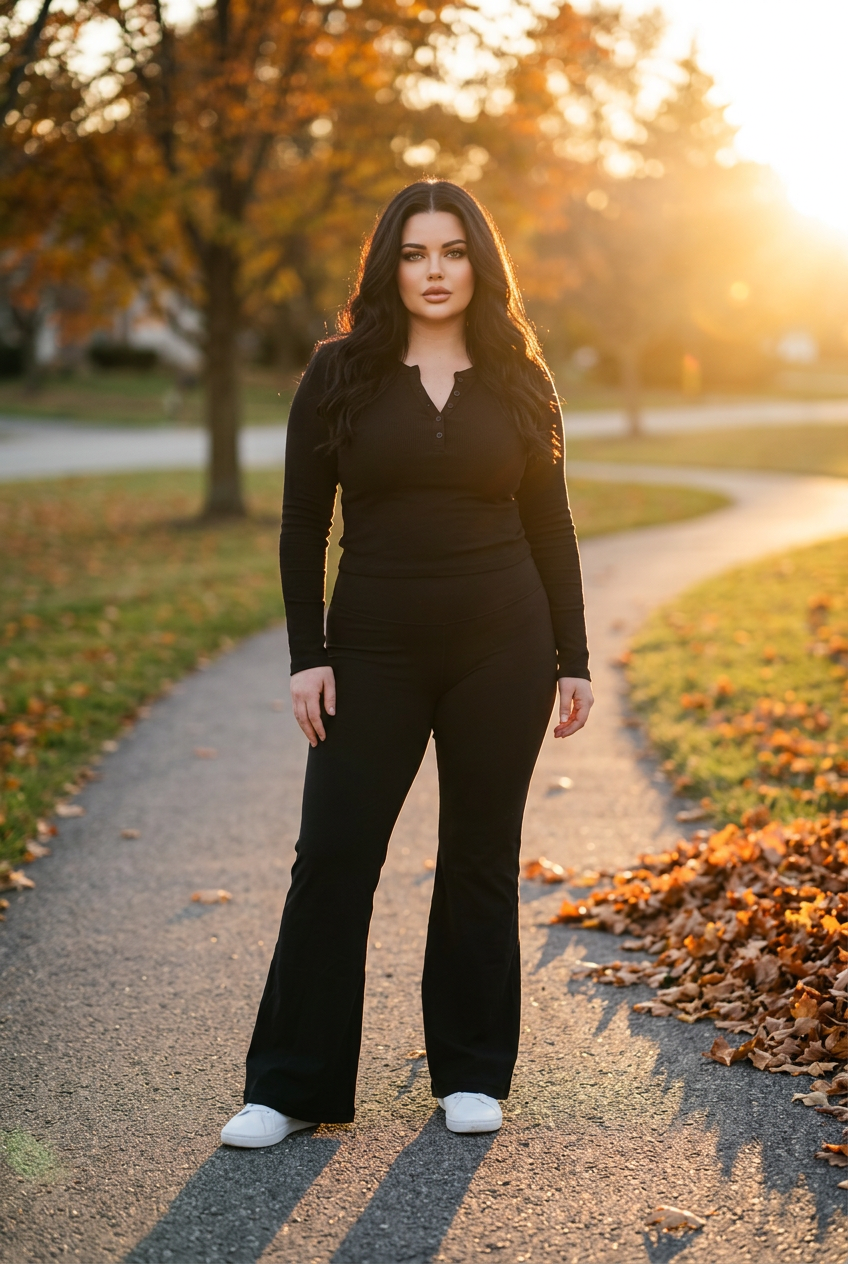

Boody Alternatives: 4 Organic Pants That Last Longer

Table of Contents
- Why Look Beyond Boody for Organic Pants?
- Bamboo vs. Organic Cotton: Which Fabric Performs Better?
- Top Boody Alternatives for Organic Pants
- Price Comparison: Cost-Per-Wear Analysis
- What to Look for in GOTS Certified Clothing Brands
- How to Spot Truly Sustainable Loungewear Brands
- Conclusion: Making the Switch to Eco-Friendly Basics
- Frequently Asked Questions
Last Updated: September 8, 2026
Why Look Beyond Boody for Organic Pants?
Many shoppers searching for a Boody alternative for organic pants want a pant that survives more than a season of washing. Boody built its name on soft bamboo basics.
The real issue is that "organic pants" has become a crowded label. A true Boody alternative for organic pants should deliver three things: verifiable organic cotton or bamboo viscose, ethical manufacturing you can trace, and a cut designed for real bodies that move.
Below, we compare the two dominant plant fibers, review three specific pants that outperform the category standard, and give you a cost-per-wear framework so you never overpay for loungewear again.
Bamboo vs. Organic Cotton: Which Fabric Performs Better?
The single biggest decision in sustainable loungewear is the fiber choice. Bamboo viscose and organic cotton perform differently across breathability, moisture-wicking, durability, and environmental impact.
The Technical Breakdown: Why Fibers Behave Differently
Bamboo Viscose (Rayon)
Bamboo viscose is manufactured by dissolving bamboo cellulose and regenerating it into fibers, creating a round, smooth cross-section that leaves microscopic gaps between yarns. Those gaps trap air, acting as an insulator in cooler conditions and a buffer against heat in warmer ones.
For moisture management, bamboo viscose has a higher moisture regain (around 13%) than cotton (around 8%), meaning each fiber can absorb more water vapor before it feels wet, pulling moisture away from your body and spreading it across a larger surface area where it evaporates more quickly.
However, bamboo viscose is a regenerated fiber with shorter polymer chains than natural cotton. Under repeated friction and washing, those chains can break down, leading to pilling and thinning in high-stress areas like the inner thighs or between the knees.
Organic Cotton
Organic cotton is a natural fiber with a twisted, ribbon-like structure. That twist gives cotton fibers more internal friction, translating to greater tensile strength, which is why it holds up better in high-friction zones. The trade-off is that cotton absorbs moisture into its core rather than spreading it across the surface, so it stays wet and can feel clammy during physical activity.
Cotton also lacks bamboo's natural antimicrobial properties. Bamboo contains "bamboo kun," which inhibits bacterial growth, but much of this is lost in viscose processing. Organic cotton has no such inherent property, so odor control depends entirely on breathability and drying speed.
The Blend Solution: What the Ratios Actually Do
A bamboo and organic cotton blend is an engineered solution. The bamboo component (typically 60-70%) provides softness, temperature regulation, and moisture-wicking. The organic cotton component (typically 25-30%) provides tensile strength that prevents pilling and maintains fabric integrity through repeated washing. The remaining 3-5% spandex adds elastic recovery, preventing permanent bagging.
The critical ratio is at least 60% bamboo to 25% cotton. If cotton rises above 40%, the fabric loses its moisture-wicking advantage and feels heavier; if bamboo rises above 75%, you sacrifice durability. The sweet spot is a 65/30/5 split, which the Riko Sport Pant and Umi Jogger use.

Climate and Activity Matching
Here is how to choose based on your specific needs:
- Hot, humid climates (e.g., Gulf Coast summers): Prioritize bamboo viscose content above 70%. The moisture-wicking and airflow properties will keep you drier than cotton, which absorbs humidity and feels heavy.
- Dry, cool climates (e.g., Mountain West): A 50/50 bamboo-cotton blend works well. The cotton adds warmth retention without the clamminess issue, since the air is dry enough to evaporate moisture quickly.
- High-intensity activities (e.g., hot yoga, running errands on foot): Choose a bamboo-dominant blend with at least 5% spandex. The stretch recovery prevents the fabric from sagging when you move, and the bamboo wicks sweat before it soaks through.
- Low-activity lounging: Any ratio works, but if you run warm at night, lean toward higher bamboo content for its breathability.
The Environmental Nuance
Both fibers have environmental trade-offs. Organic cotton uses significantly less water than conventional cotton and no synthetic pesticides, but it still requires substantial irrigation. Bamboo viscose grows rapidly without pesticides, but the viscose process uses chemicals like sodium hydroxide and carbon disulfide. The key is whether the manufacturer uses a closed-loop process that captures and recycles those chemicals. Look for brands that disclose their viscose sourcing and whether they use an EcoCert or OEKO-TEX certified process. The Textile Exchange's Preferred Fiber & Materials report provides annual rankings of which fibers and processes have the lowest environmental impact, and closed-loop bamboo viscose consistently ranks above conventional cotton.
The Bottom Line
For a Boody alternative for organic pants, the strongest approach is a blend that leverages bamboo's moisture management and cotton's tensile strength. Pure bamboo feels luxurious but fails on durability; pure cotton lasts but feels heavy and clammy. The blend gives you the best of both, provided the ratios are engineered correctly.
Top Boody Alternatives for Organic Pants
After evaluating options against criteria like fabric weight, gusset construction, and ethical labor practices, three pants stand out.

Riko Sport Pant: The All-Day High-Rise
The Riko Sport Pant is the strongest all-around Boody alternative for organic pants, especially for women who need a pant that transitions from a morning walk to a home office workday. It is crafted from a bamboo, organic cotton, and spandex blend that delivers bamboo's softness with the recovery of a performance fabric.
This 31-inch high-rise pant uses an exclusive Eco Germ Gard bamboo treatment. The waistband is a soft elastic with an inside drawcord, so you get a secure fit without digging. It features front slant pockets and full rear pockets sized for a phone. At $60.00, it is priced for everyday use.
Clare Flare: The Breathable Silhouette
For those who want a more polished look, the Clare Flare delivers a 33-inch cuttable inseam in a signature bamboo cotton blend. This pant is the answer if you find joggers too casual but leggings too restrictive. The flare silhouette elongates the leg, and the waistband has no elastic at all, eliminating the squeeze and dig that cause discomfort during long sitting sessions.
The Clare Flare is engineered for breathability and temperature regulation. The cuttable hem lets you customize the inseam at home without fraying. At $70.00, it is the most expensive option here.
Umi Jogger: The Versatile Essential
The Umi Jogger is the most accessible entry point at $55.00, serving as the perfect leggings alternative for women who want a semi-fitted silhouette that does not cling. It uses the same Eco Germ Gard Herbal Bamboo technology.
What separates the Umi from standard joggers is the fabric blend and the cut. The bamboo, organic cotton, and spandex combination provides stretch and recovery, so the pant does not bag out at the knees by mid-afternoon. The biodegradable construction also addresses what happens when the garment reaches the end of its life.
| Pant | Price | Key Feature | Best For |
|---|---|---|---|
| Riko Sport Pant | $60.00 | High-rise, pockets, Eco Germ Gard | All-day wear, errands, home office |
| Clare Flare | $70.00 | Cuttable 33" inseam, no elastic waist | Polished casual, warmer climates |
| Umi Jogger | $55.00 | Semi-fitted, biodegradable | Gym, lounging, leggings alternative |
Price Comparison: Cost-Per-Wear Analysis
The most honest way to compare a $55 pant against a $25 department store find is cost-per-wear, not sticker price. A cheap pant that pills after ten washes and loses its shape by month three delivers maybe thirty wears, or roughly $0.83 per wear. A well-constructed organic pant that survives two years of weekly washing delivers over one hundred wears, bringing the cost down to around $0.55 per wear.
The math shifts even further when you factor in the environmental impact. The textile industry is a major contributor to global carbon emissions, and the most sustainable garment is the one you do not have to replace. Choosing a durable Boody alternative for organic pants is a direct way to reduce your personal footprint.
A common mistake is buying multiple cheap pairs instead of one quality pair. We recommend starting with one high-quality pant, wearing it for a month, and assessing the fit and fabric before expanding your capsule wardrobe.
What to Look for in GOTS Certified Clothing Brands
GOTS certification is the gold standard for organic textiles, but understanding what it actually verifies will help you avoid greenwashing. The Global Organic Textile Standard certifies the entire supply chain, from harvesting the raw fiber to the final product, ensuring that at least 95 percent of the fibers are organic and that processing meets strict environmental and social criteria.
But here is what most articles do not tell you: GOTS certification ends at the factory gate. It verifies how the fabric was grown and processed, but it says nothing about what happens to the garment after you are done with it.
The End-of-Life Gap: What Happens When Your Pants Wear Out?
The textile industry generates an estimated 17 million tons of textile waste annually in the United States alone, and the majority ends up in landfills. The question is whether a garment can re-enter the material cycle or become permanent waste.
Here is the reality of end-of-life options for organic pants:
1. Home Composting (The Ideal Scenario)
Pure organic cotton and bamboo viscose are biodegradable under the right conditions. If a pant is made from 95-100% natural fibers with no synthetic thread, elastic waistband, or metal hardware, it can be cut into strips and added to a home compost pile. Under active composting conditions (temperatures above 130°F, adequate moisture, and oxygen), the fibers will break down within 3-6 months. The key is removing all non-fiber components first.
2. Textile Recycling Programs (The Practical Option)
Most municipal recycling programs do not accept textiles, but there are dedicated textile recyclers that do. Organizations like Secondary Materials and Recycled Textiles (SMART) represent recyclers that process used clothing. The challenge is that these programs typically require you to mail in your garments, and they may not distinguish between natural and synthetic blends. When you send a bamboo-cotton-spandex blend to a textile recycler, the spandex content (usually 3-5%) can contaminate the recycling stream because it cannot be separated from the natural fibers.
3. Brand Take-Back Programs (The Emerging Solution)
A growing number of sustainable brands are launching take-back programs where you return worn garments and receive a discount on your next purchase. The brand then recycles the fabric into new products or downcycles it into insulation or padding. This is the circular fashion model, and it is the most reliable way to ensure your pants do not end up in a landfill. When evaluating a Boody alternative for organic pants, ask the brand directly: "What happens to this garment when I am done with it?"
How to Evaluate a Brand's End-of-Life Commitment
Here is a practical checklist to use when researching any organic pants brand:
- Fiber composition: Look for at least 90% natural fibers. The higher the natural content, the more viable composting or recycling becomes.
- Hardware and trim: Metal zippers, buttons, and synthetic elastic waistbands must be removed before recycling or composting. Brands that use natural rubber elastic or no hardware at all make end-of-life processing easier.
- Take-back program: Does the brand offer one? If not, ask why. A brand that designs for circularity will have a plan for its products at end-of-life.
- Recycling partnerships: Some brands partner with specialized recyclers that can handle blended fabrics. The Ellen MacArthur Foundation's circular economy resources document which material streams are currently recyclable at scale.
The Biodegradability Caveat
Biodegradable does not mean "harmless if littered." A bamboo-cotton pant will break down in a compost pile, but not quickly in a landfill, where conditions are anaerobic and decomposition happens at a glacial pace. Landfills are designed to prevent decomposition to minimize methane emissions, so even natural fibers can persist for decades. This is why the most sustainable choice is a durable fabric that you keep in use for as long as possible, and then route through a proper end-of-life channel.
The Bottom Line
GOTS certification tells you the fabric was grown and processed responsibly. It does not tell you what happens after the garment's useful life. When comparing a Boody alternative for organic pants, add one more question to your evaluation: "What is the end-of-life plan for this garment?" The brands that can answer with a concrete program, not a vague promise about biodegradability, are the ones genuinely committed to circular fashion. The Umi Jogger, for example, uses a biodegradable construction with no synthetic hardware.

How to Spot Truly Sustainable Loungewear Brands
Spotting genuine sustainability requires looking past the hero imagery of bamboo forests and asking operational questions. The first test is fabric composition. A truly sustainable pant is made from natural fibers like organic cotton, bamboo viscose, or lyocell, with minimal synthetic content. The second test is the dye process.
The third test is the hardest to verify: the human element. Ethical labor practices and fair trade certification are not always visible on a product page, but they are central to whether a brand is genuinely sustainable. The International Labour Organization's research on the garment sector highlights that supply chain transparency is the first step toward ensuring workers are treated fairly. A brand that is vague about where its clothes are made is usually hiding something.
A final consideration is end-of-life. Circular fashion asks what happens to the garment after you are done with it. Biodegradable fabrics like bamboo and organic cotton can break down naturally, whereas synthetic blends will persist in landfills for decades. Choosing a Boody alternative for organic pants that is biodegradable closes the loop.
Conclusion: Making the Switch to Eco-Friendly Basics
Switching from a legacy brand to a thoughtfully designed Boody alternative for organic pants comes down to trusting the materials and the maker. You are paying for verifiable organic fibers, ethical manufacturing, and a cut that respects the reality of a woman's body.
The Ecogoldencomfort collection addresses the concerns that matter most: sensitive skin, all-day breathability, and durability through repeated washing. Our pants are crafted from plant-based bamboo and organic cotton blends with Eco Germ Gard technology, which is naturally antimicrobial and gentle on delicate skin. We use eco-friendly packaging and design for garment longevity.
Get started with Ecogoldencomfort and experience the difference between pants that merely look sustainable and pants that are built to last.
Frequently Asked Questions
Is Boody GOTS certified?
No, Boody does not hold GOTS certification for its bamboo viscose products. Boody's bamboo fabric is processed and certified under the OEKO-TEX Standard 100, which verifies the absence of harmful substances. If GOTS certification is a priority for your organic pants, look for brands that specifically list this credential. GOTS covers the entire supply chain from harvesting to manufacturing, which is why many eco-conscious shoppers prefer it.
How do organic cotton pants compare to bamboo fabric for daily wear?
Organic cotton is durable, breathable, and gets softer with each wash, making it a solid choice for daily wear. Bamboo viscose offers superior moisture-wicking and thermal regulation, keeping you cooler in summer and warmer in winter. For all-day comfort, bamboo blends like those in the Riko Sport Pant or Clare Flare provide a silky feel with added spandex for stretch and recovery.
What are the most comfortable eco-friendly pants for women?
The most comfortable eco-friendly pants combine high-quality natural fibers with a functional fit. Look for pants with a soft elastic waistband and fabric weight suitable for your climate. The Umi Jogger offers a semi-fitted silhouette that moves with your body, while the Clare Flare features a no-elastic waistband that eliminates digging. Both are crafted from bamboo and organic cotton blends that resist pilling.
How much should I expect to pay for quality organic pants?
Quality organic pants typically range from $55 to $70, depending on the fabric blend and construction. At $60, the Riko Sport Pant offers a bamboo, organic cotton, and spandex blend with functional pockets. Consider cost-per-wear: if a $60 pair lasts 300 washes versus a $35 pair that pills after 50 washes, the pricier option delivers better long-term value.